If you're renting a property in Dubai, one word you'll hear over and over is Ejari. But what exactly is it?
Put simply, Ejari is the official online system for registering all tenancy contracts in Dubai. It's a mandatory step that turns your rental agreement from a simple document between you and your landlord into a legally recognised and enforceable contract.
Without an Ejari registration, your lease agreement doesn't officially exist in the eyes of Dubai's authorities.
What is the Ejari System?

The name 'Ejari' is actually the Arabic word for 'My Rent', which gets straight to the point. This system was introduced by Dubai's Real Estate Regulatory Agency (RERA) to bring structure and transparency to the city's dynamic rental market.
Think of it as the official record-keeper for every rental transaction. It standardises contracts and ensures all the key details—like rent amount, tenancy period, and property specifics—are logged in a central, government-managed database.
This digital registration creates a clear and fair framework that protects the rights of everyone involved. It’s the cornerstone of a healthy landlord-tenant relationship in Dubai.
RERA's Role in Managing Ejari
RERA is the government body that oversees and manages the entire Ejari system. They use the data collected to monitor market trends, regulate rental prices, and ensure fairness across the board. This isn't just a small-scale operation; by 2024, more than 900,000 rental contracts were registered on the platform, an increase of 8% from the year before.
These numbers show just how essential Ejari has become to Dubai's real estate sector. If you want to dive deeper, you can also learn more about Dubai's smart rental index and how it connects to the system.
Ejari isn’t just about bureaucracy. It’s the legal backbone of your tenancy agreement. It elevates a private deal into a government-attested document, giving you a solid legal standing if any disagreements come up later.
To give you a quick overview, here are the key components of the system.
Ejari System At a Glance
| Aspect | Description |
|---|---|
| Purpose | To officially register and legalise all tenancy contracts in Dubai. |
| Governing Body | The Real Estate Regulatory Agency (RERA). |
| Legal Status | Mandatory for all rental agreements in the emirate. |
| Key Benefit | Protects the rights of both landlords and tenants and provides a basis for dispute resolution. |
| Output | An official Ejari certificate with a unique ID number. |
| Integration | Required for DEWA connections, visa renewals, and other essential services. |
Ultimately, getting to grips with what Ejari is and how it works is the crucial first step for any tenant or landlord navigating the Dubai rental market.
Why Ejari Is Your Legal Shield in Dubai
Registering your tenancy contract with Ejari is more than just a piece of administrative paperwork; it's what gives your lease agreement real teeth in Dubai. Think of it as the official government seal of approval that makes your rental contract legally binding and enforceable.
Simply put, without a registered Ejari, your tenancy contract is essentially invisible in the eyes of the law. This is a crucial point many people miss. Should a disagreement pop up with your landlord, the Rental Dispute Settlement Centre (RDSC)—the official body that handles these issues—won't even look at your case without a valid Ejari certificate.
Protection for Tenants and Landlords
The entire system is built to foster a fair and transparent rental market. It lays down clear ground rules, heading off potential misunderstandings and preventing one party from making unilateral decisions that affect the other.
For tenants, Ejari offers some very specific and practical safeguards:
- Prevents Unfair Rent Hikes: Your landlord can't just invent a new rental price at will. Any increase must be in line with the official RERA Rental Index, and your Ejari provides the registered history to prove it.
- Guards Against Unlawful Eviction: The system solidifies the legal grounds for eviction, which protects you from being asked to leave without proper cause or notice.
- Secures Your Deposit: With the deposit terms clearly stated in the registered contract, you have an official record. This goes a long way in making sure your security deposit is returned fairly at the end of your lease.
Landlords benefit just as much. Ejari provides a solid legal framework that helps them collect rent on time and uphold all the terms of the tenancy agreement. It’s a core tool for any property owner, and a comprehensive guide to property management in the UAE can offer even more insight into managing rental assets effectively.
The Key to Essential Services
Legal protection is just one half of the story. On a practical level, your Ejari is the key to actually living in your new home. It’s a mandatory document you'll need to set up all your essential services.
Without a valid Ejari certificate, you simply cannot activate your DEWA (Dubai Electricity and Water Authority) account. This makes getting your Ejari sorted one of the very first things you must do after signing a lease.
This requirement helps ensure that every occupied property in the city is officially documented, which is a big part of what keeps Dubai’s communities so well-organised and secure. At its core, the Ejari system is the bedrock of a rental process you can trust.
How Ejari Shapes Dubai's Real Estate Market
Think of Ejari as more than just a system for registering your tenancy contract. It's the central nervous system of Dubai's entire rental market, collecting vital information that brings clarity and stability to everyone involved.
Every single registered contract is a piece of a much larger puzzle. The Dubai Land Department (DLD) gathers all this data, turning hundreds of thousands of individual agreements into a powerful, big-picture view of the market. This massive pool of information is exactly what fuels crucial tools like the official RERA Rental Index, giving us an unbiased look at rental values across the city.
Fostering a Stable and Transparent Market
This data-driven approach is what keeps the market in check. By analysing real-time rental information, the DLD can spot trends, prevent wild price speculation, and ensure any rent increases are fair and grounded in reality. It creates a more predictable environment for tenants, landlords, and investors alike.
Essentially, the process is simple but incredibly effective.
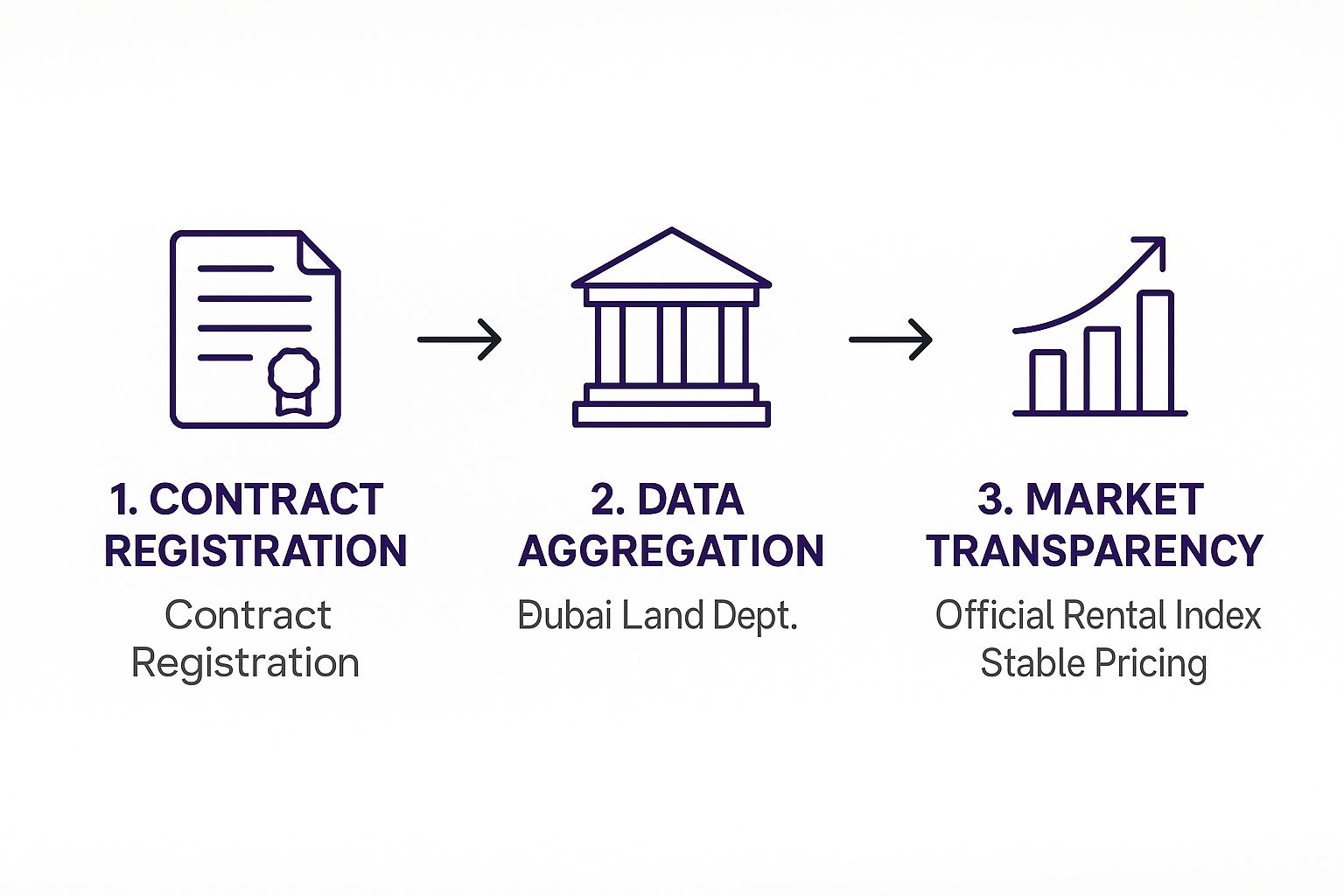
This straightforward flow—from an individual rental agreement to city-wide regulation—is a cornerstone of what makes Dubai's real estate sector so mature and attractive to both residents and international investors.
Dubai is always pushing forward, and its commitment to a transparent market is no exception. A perfect example is the new Smart Rental Index, launched in January 2025. This isn't just an update; it's a leap forward, using artificial intelligence to analyse data from over 900,000 Ejari tenancy contracts to provide pinpoint-accurate rental valuations in real-time. You can get a deeper look into how this is affecting Dubai's rental market trends for 2025.
By standardising contracts and centralising data, Ejari transforms countless individual transactions into a coherent, regulated, and predictable market. This transparency is a key reason for the sustained confidence in Dubai's property sector.
At the end of the day, Ejari does much more than just process paperwork. It builds the very foundation of trust and reliability that defines Dubai’s real estate world, making sure the rental process is clear and fair for everyone.
Your Step-by-Step Guide to Ejari Registration

Getting your Ejari registered might seem a bit daunting at first, but it's actually quite a straightforward process once you know what's involved. The secret to a smooth experience? Get all your paperwork in order before you start.
Think of it in two simple stages: getting your documents ready, and then submitting them. If you’re just starting to draw up your agreement, using comprehensive free rental agreement templates can give you a solid foundation.
Gathering Your Essential Documents
Before you can even think about submitting your application, you need to collect a specific set of documents from both the tenant and the landlord. Having everything ready to go is the single best thing you can do to avoid frustrating delays.
The table below breaks down exactly what you'll need from each party. Double-check this list to make sure nothing is missing.
| Document | Required From Tenant | Required From Landlord |
|---|---|---|
| Emirates ID | ✅ | ✅ |
| Passport Copy | ✅ | ✅ |
| UAE Residence Visa | ✅ | ❌ |
| Property Title Deed | ❌ | ✅ |
| Original Tenancy Contract | ✅ | ✅ (Both must sign) |
| Recent DEWA Bill | ✅ (Or previous tenant's final bill) | ❌ |
Getting these documents together is the most critical part of the process. Once you have them all, you're ready for the final step.
Pro Tip: Scan or take clear photos of all your documents and save them in a folder on your phone or cloud storage. This will make uploading them to an app or website a breeze.
Choosing Your Registration Method
With all your documents in hand, you have a few options for actually getting the registration done. Each method caters to different preferences, whether you value speed, convenience, or in-person support.
- The Dubai REST App: This is by far the fastest and easiest way. It’s the official app from the Dubai Land Department, and it lets you do everything digitally. You just upload your documents, and you can often get your Ejari certificate back within 24 hours.
- Official Online Portals: If you prefer working on a computer, you can use the official Ejari website. The process is very similar to the app—you fill out the forms and upload your documents through your web browser.
- Ejari Typing Centres: For anyone who'd rather have someone handle it for them, there are approved typing centres all over Dubai. They'll check your documents, manage the submission, and take care of everything for a small service fee. It’s a great option if you want that extra peace of mind.
Navigating Your Ejari Renewal and Cancellation
Think of your Ejari contract not as a one-and-done document, but as a living part of your tenancy agreement. Its lifecycle has two key moments you need to handle correctly: renewal and cancellation.
Keeping Your Ejari Up to Date
Renewing your Ejari is a yearly must-do. It’s not just administrative red tape; failing to renew can have real consequences, like your DEWA services getting disconnected. More importantly, it keeps your tenancy agreement legally sound and officially recognised by the government.
If your landlord suggests a rent increase at renewal time, your first move should be to consult the official RERA Rental Index. This calculator gives you the fair market rent for your property, providing a solid, data-backed reference to ensure any proposed increase is reasonable.
The Importance of Proper Cancellation
When your lease ends and you move out, cancelling your Ejari is just as crucial as registering it in the first place. This step officially severs your legal ties and responsibilities to the property.
Don't skip this. If you don't cancel your Ejari, the new tenant won't be able to register theirs. Worse, you could find yourself on the hook for their utility bills or any problems that crop up long after you've handed back the keys.
This formal check-out process is a final layer of protection for you. With Dubai’s property market buzzing with activity—sometimes seeing over 53,000 transactions worth AED 184 billion in a single quarter—this system of mandatory registration and cancellation is what keeps things orderly. It brings legal clarity to the thousands of residential and commercial leases across the city. For a deeper dive into these trends, check out these insights on Dubai's real estate market performance.
Staying on top of your Ejari renewal and cancellation is simple but essential. It’s how you avoid common pitfalls and ensure a smooth, problem-free tenancy from start to finish.
Your Ejari Questions, Answered
As you get to grips with renting in Dubai, you'll naturally have a few questions about the Ejari system. It's a fundamental part of the process, but some of the details can seem a bit murky at first. Let's clear up some of the most common queries landlords and tenants run into.
Getting these points sorted will help you navigate your tenancy with confidence and sidestep any potential headaches.
Who Is Responsible For Paying The Ejari Fees?
This is probably the most frequently asked question, and the answer involves both the law and common practice. While Dubai's rental laws technically state that the landlord is responsible for registering the contract, the reality on the ground is usually different.
In most tenancy agreements, a clause is included that passes the responsibility for registration and payment onto the tenant. It's become standard practice across Dubai, so always read your contract carefully. The cost isn't huge, but it's best to know exactly who's handling it before you sign on the dotted line.
Key Takeaway: By custom, the tenant usually pays for the Ejari. Double-check your rental agreement to confirm this and avoid any confusion.
Can I Register Two Ejari Contracts At Once?
Simply put, no. The Ejari system is built to tie one person to one primary residence. This is a crucial link because your Ejari certificate is what allows you to connect your DEWA (Dubai Electricity and Water Authority) account.
If you’re moving, you have to follow a specific order. You must cancel the Ejari for your old place before you can register a new one. This creates a clean break, ensuring you're no longer responsible for the previous property's utilities and that your new DEWA setup goes off without a hitch.
What To Do If A Landlord Refuses To Register Ejari?
Ejari registration is a legal must-have, not an optional extra. If you find yourself in a situation where your landlord won't cooperate or refuses to give you the documents needed for registration, you have a clear path forward. You can go to the Rental Dispute Settlement Centre (RDSC) and file a petition to force the registration.
Don't let this slide. Without a registered Ejari, you can't get your water and electricity turned on, and more importantly, your tenancy contract has zero legal weight. This leaves you completely exposed if a dispute arises, so it's vital to resolve it right away.
How Long Does The Registration Process Take?
The turnaround time for getting your Ejari certificate really depends on how you apply.
- Dubai REST App: This is by far the quickest route. If your documents are all in order, you can often have the certificate in your inbox within one business day.
- Typing Centres: The approved centres are also very efficient, many offering same-day service.
The single biggest cause of delays is incorrect or missing paperwork. The best way to ensure a fast, smooth process is to double-check that you have every single required document ready before you even start the application.
Navigating the complexities of Dubai's regulations, from Ejari registration to full business incorporation, requires expert guidance. At 365 DAY PRO Corporate Service Provider LLC, we specialise in making these processes seamless.
✅ Best Corporate Service Provider in Dubai, Abu Dhabi & Sharjah
✅ Specialists in Mainland Company Formation in Dubai & Abu Dhabi
✅ Specialists in Freezone Company Formation across the UAE
✅ 24/7 Support Service – Always here when you need us
✅ Cost-Effective Business Setup Solutions tailored to your needs
✅ Enjoy UAE Tax Benefits for International Entrepreneurs
Learn more about how we can support your business goals at https://365dayproservices.com.
📞 Call Us Now: +971-52 923 1246
💬 WhatsApp Us Today for a Free Consultation