So, you're thinking about setting up a trading business in Dubai? Great move. The first question on everyone's mind is always the same: "What's it actually going to cost me?"
Let's get straight to it. For a Dubai trading license, you're generally looking at a first-year investment of between AED 22,000 and AED 35,000 for a mainland company. If you go the free zone route, the range is typically AED 18,000 to AED 30,000.
Think of these numbers as a solid starting point. Your final bill will hinge on the specifics—what you're trading, where you set up shop, and how many visas you'll need for your team.
Dubai Trading License Cost A Quick Comparison
To give you a clearer picture right from the start, here's a quick side-by-side look at the estimated costs for your first year. It helps to see where the money goes in both a mainland and a free zone setup.
| Cost Component | Mainland (DET) Estimate | Free Zone Estimate |
|---|---|---|
| Initial Government Fees | AED 10,000 – AED 15,000 | AED 8,000 – AED 12,000 |
| Office Solution (Ejari/Flexi-Desk) | AED 5,000 – AED 10,000+ | Included or AED 3,000 – AED 7,000 |
| Visa & Establishment Card | AED 5,000 – AED 8,000 | AED 4,000 – AED 6,000 |
| PRO Services & Approvals | AED 2,000 – AED 4,000 | Often bundled in the package |
| Total Estimated First-Year Cost | AED 22,000 – AED 37,000 | AED 18,000 – AED 30,000 |
This table shows that while free zones often seem cheaper initially, the real value depends entirely on your business goals. Let's break that down further.
What Is the Real Cost of a Dubai Trading License?
When you start digging into the costs, you’ll quickly realise it's not just one single license fee. It’s a mix of different charges that all add up. I like to compare it to buying a car—you see the sticker price for the base model, but the final cost depends on the engine, the trim, and all the extras you add.
The total cost of your Dubai trading license is built from several key pieces: mandatory government fees, reserving your trade name, getting initial approvals, and securing your office space (whether it’s a physical office or a flexi-desk). Each one is a non-negotiable part of operating legally here, so understanding them upfront is the secret to budgeting properly and avoiding surprises.
Your Financial Snapshot for a Dubai Business Setup
Getting a handle on these numbers is your first major task as an entrepreneur in Dubai. It’s a critical step that many overlook, but nailing down your budget is just as important as your business plan. In fact, to truly succeed, you should master the investment decision making process to ensure this venture is the right strategic move for you.
This chart gives you a great visual breakdown of where your money goes when setting up on the mainland versus in a free zone.
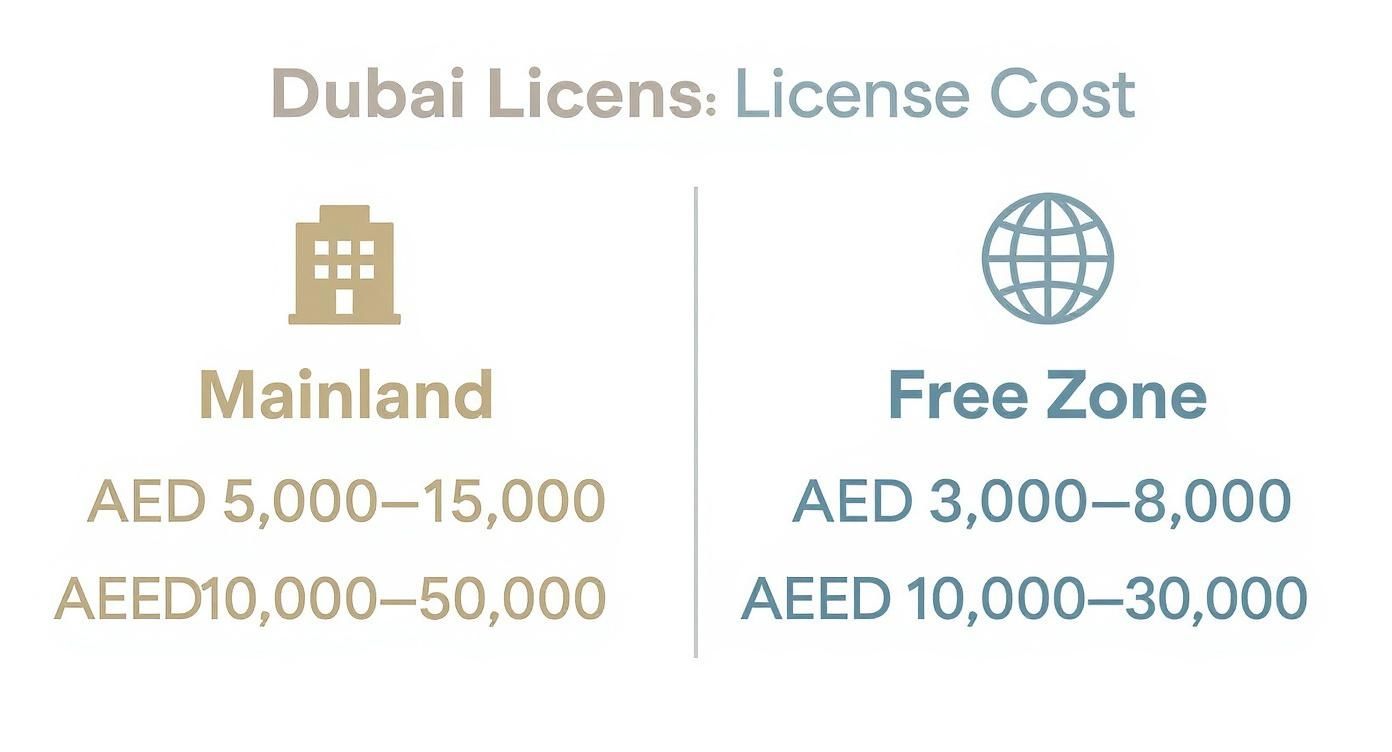
As you can see, the numbers show free zones can be a more affordable entry point. However, a mainland license gives you unrestricted access to trade directly within the booming UAE market, which is a game-changer for many businesses.
This choice—mainland or free zone—is the single biggest factor that will shape your final costs.
-
Mainland License: This is your ticket to trading anywhere in the UAE without a middleman. It’s the perfect fit if you want to open a physical shop, work directly with government bodies, or build a strong local brand presence.
-
Free Zone License: Ideal for businesses focused on international trade, import/export, or those who don’t need a physical storefront on the mainland. The big draws here are 100% foreign ownership, tax benefits, and often all-in-one, cost-effective packages.
Ultimately, what you plan to trade will determine the exact license and approvals you need. A general trading license has a different price tag than a license for something specific like electronics or foodstuff trading. This guide will walk you through all these variables, giving you a clear roadmap to budget for your new Dubai venture.
A Closer Look at Dubai Mainland Licence Fees
Opting for a Dubai mainland licence is a big move. It’s your ticket to trading directly with anyone, anywhere in the UAE—from local customers to government bodies. This is a level of market access you just don't get in a free zone. But with that freedom comes a different cost structure, one managed by Dubai's Department of Economy and Tourism (DET), which you might still hear people refer to by its old name, the DED.
Figuring out the total cost can feel like putting together a puzzle. Each piece is a mandatory government fee, and only when you have them all do you see the full picture of what your Dubai trading licence will actually cost. Let’s lay out all the pieces so you can build a clear and predictable budget from the start.
The Foundation: Core Government and Registration Fees
First things first, you have a set of fixed fees that go straight to the government. These are the non-negotiable costs to get your company legally on the books in Dubai. Think of it as the price of admission to one of the world's most dynamic markets.
Here’s what those initial, essential fees look like:
- Trade Name Reservation: This is where you lock in your business name. It has to be unique and follow the UAE's naming rules. This usually costs around AED 620.
- Initial Approval Certificate: This is a critical green light from the DET, confirming they have no objection to you setting up your business. Getting this certificate costs about AED 120 and you can't move forward without it.
- Memorandum of Association (MOA) Attestation: If you're setting up an LLC, your MOA is the legal blueprint of your company. It needs to be officially notarised and attested, with fees that can vary but typically start from AED 900.
These initial charges lay the legal groundwork for your trading company and are the first layer of your setup expenses.
Understanding the Variable Licence Costs
Once the initial paperwork is done, you'll run into costs that aren't so black and white. The final Dubai trading licence cost for a mainland setup really depends on what you plan to do. Some business activities need extra approvals from different government ministries, and each of those can add to the bill.
For a standard commercial licence from the DET, the core fee can be anywhere from AED 10,000 to AED 35,000. Most trading businesses find themselves in the AED 15,000 to AED 25,000 range. The exact amount is tied to your specific business activities, which is why a single "one-size-fits-all" price is never accurate. If you want to dive deeper into how different activities affect the price, you can discover more insights about trade licence costs on oncount.com.
One cost that often catches new entrepreneurs by surprise is the Market Fee, also known as the Municipality Fee. This isn't a one-off payment; it's an annual charge paid to the DET, calculated as 2.5% of your office's yearly rent.
This fee directly links your licence cost to your physical office, making your choice of workspace a major financial decision right from the get-go.
Factoring in the Third-Party and Additional Expenses
Beyond the main DET fees, there are a few other essential costs you'll need to cover to get your business up and running. These are often paid to other government departments or private providers, but they're just as crucial to the setup process.
Here’s what else you need to add to your budget:
- Office Lease and Ejari Registration: A physical office space is a must for almost all mainland trading licences. You'll need a valid tenancy contract registered with the Ejari system, which itself has a registration fee of around AED 220. Of course, the rent will be your biggest variable cost here.
- Local Service Agent (LSA) or UAE National Partner: While 100% foreign ownership is now the norm for most trading activities, some specialised sectors might still require a Local Service Agent. Their annual fee is negotiated and can run from AED 5,000 to AED 15,000, sometimes more.
- Establishment Card: This is your key to hiring staff. Issued by the immigration authorities, it allows you to apply for employee visas and costs approximately AED 2,000.
- PRO Services: This is the fee you pay a specialist to handle all the government paperwork, approvals, and legwork for you. It's more than just a convenience; it's an investment in getting everything done correctly and on time, helping you avoid mistakes that could cost you both time and money.
By mapping out every single line item—from that first trade name fee to your annual rent and professional support—the seemingly complex cost of a mainland licence becomes a clear, manageable financial plan. A detailed approach like this, especially with an expert guiding you, ensures there are no hidden surprises on your path to launching in Dubai.
Diving into Free Zone License Packages
While a mainland company gives you a direct line to the local UAE market, free zones are a very attractive alternative, especially if you're an international entrepreneur. Their biggest draw is the bundled, all-in-one packages that make getting started feel much simpler and, at first glance, a lot cheaper.
Think of it like booking an all-inclusive holiday versus piecing together flights, hotels, and tours yourself. Free zones bundle the essential ingredients you need to get your business off the ground quickly.
The headline features are hard to ignore: 100% foreign ownership, zero corporate and personal income taxes, and the ability to send all your profits home. This structure makes the dubai trading license cost in a free zone seem incredibly predictable. But, it’s absolutely vital to look inside the box and understand what you’re actually getting before you sign on the dotted line.
What’s Really Inside a Typical Free Zone Package?
It's a common misconception that all free zone packages are the same. The reality is they can be worlds apart in what they offer and what they cost. It all depends on the zone's location, what industry it’s built for, and the level of service you need.
Still, most starter trading license packages will cover a core set of basics. Here’s a general idea of what you can expect:
- Trade License Fee: This is the main ticket item that legally allows you to operate your trading business within that specific free zone’s jurisdiction.
- Registration and Incorporation Fees: These are the one-off administrative charges for officially setting up your company entity.
- Trade Name Reservation: Unlike on the mainland, the fee to secure your unique business name is almost always included in the package.
- Flexi-Desk or Shared Office Access: To meet the physical address requirement, most packages include a basic co-working space solution.
This bundled approach is exactly why so many entrepreneurs lean towards free zones. It takes a lot of the guesswork out of budgeting for a long list of separate government fees.
Comparing Costs Across Popular Dubai Free Zones
The UAE has over 40 free zones, and each one has its own pricing, rules, and specialities. For instance, a commodity-focused zone like DMCC will have a completely different cost structure than a hub built for e-commerce, like Dubai CommerCity. This variety is a good thing—it means you can shop around to find a package that genuinely fits your business and your budget.
For a first-year trading license in a Dubai free zone, you should budget anywhere from AED 25,500 to AED 112,000. That’s a huge range, but it reflects just how massive Dubai’s non-oil trade sector is—it’s a true cornerstone of the economy. To put it in perspective, Dubai's non-oil foreign trade hit an astonishing AED 1.239 trillion in just the first half of 2023. Within that total cost, the actual license registration fees can be anywhere from AED 10,000 to AED 50,000, with the rest of the costs bundled into the package. For a more granular view of these numbers, you can explore more insights about Dubai trade license expenses on safaristar.me.
To help paint a clearer picture, let's look at how some of the popular options stack up.
Comparing Popular Free Zone License Packages
Here's a quick comparison of some of the go-to free zones for new trading businesses, showing what you can expect to pay and what you get for your money.
| Free Zone | Estimated Annual Cost | Key Inclusions | Ideal For |
|---|---|---|---|
| IFZA Dubai | AED 18,000 – AED 25,000 | License, 1 Visa Eligibility, Flexi-Desk | Startups, Consultants, Service Providers |
| Meydan Free Zone | AED 20,000 – AED 35,000 | License, 3 Visa Eligibility, Flexi-Desk | E-commerce, International Trading |
| JAFZA | AED 35,000 – AED 50,000+ | License, Visa Quota, Office/Warehouse | Logistics, Import/Export, Manufacturing |
| DMCC | AED 50,000 – AED 80,000+ | License, Flexi-Desk, Prestigious Address | Commodities Trading, Crypto, Global Firms |
As you can see, the costs and benefits vary widely. A cheaper package might look appealing, but it's crucial to consider the bigger picture.
Key Takeaway: The cheapest package is rarely the best deal. A low-cost license from a more remote free zone might save you cash upfront, but it could hamstring your business by limiting access to key suppliers, clients, or logistics networks. Your choice should be a strategic one, driven by your long-term goals, not just the initial price tag.
The Balancing Act: Cost, Location, and Benefits
Choosing the right free zone is all about finding the right balance. A package from a powerhouse zone like JAFZA or DMCC commands a premium price, but what you’re paying for is a prestigious business address, world-class infrastructure, and a built-in ecosystem teeming with potential partners and customers.
On the other hand, newer or more distant free zones like IFZA Dubai offer incredibly competitive prices to attract new businesses. These can be a fantastic starting point for startups or solo entrepreneurs who operate digitally and don’t need a prime physical location. The trade-off? You might miss out on some networking opportunities or face longer travel times to meet clients in the city’s core business districts.
Ultimately, the best choice is the one that aligns your budget with your real-world operational needs. You’re looking for the right blend of cost, convenience, and community that will give your trading business the best possible foundation to succeed.
Budgeting for Your Office and Visas
Getting your trade licence is a massive step forward, but it's easy to forget that it's just one piece of the puzzle. The true Dubai trading license cost isn't just the fee for that one document; it also includes two other critical investments: your physical business address and the residency visas for you and your team.
Think of it this way: your licence is the engine, your office is the car itself, and the visas are the fuel that lets your team actually drive it. Getting this part of your budget right from the start is what separates a smooth launch from hitting a totally avoidable cash-flow crunch.
This is a common blind spot for new entrepreneurs. They focus so heavily on the licence fee that they underestimate these other essential, and often recurring, expenses. Let's dig into the real numbers so you can build a financial plan without any nasty surprises.
A Practical Look at Office Space Costs
Your choice of office is one of the biggest drivers of your annual budget. Whether you need a full-blown office on the mainland or can get by with a more flexible setup in a free zone will make a huge difference to your bottom line.
- Flexi-Desk: This is your most budget-friendly route, perfect for startups and many free zone businesses. It gives you an official business address and shared workspace access, ticking the legal boxes without the heavy cost of a private office.
- Serviced Office: A solid step up, this option provides a private, furnished office in a business centre. It’s a great middle-ground that offers more privacy and a professional image on flexible terms.
- Traditional Lease (Ejari): For most mainland companies, this is non-negotiable. You’ll need a physical office with a registered tenancy contract, known as an Ejari. It’s the priciest option but gives you total control of your space.
The cost gap here is significant. A flexi-desk in a free zone will typically run you AED 10,000 to 15,000 a year. In contrast, a physical office on the mainland can start from AED 20,000 and easily exceed AED 50,000 annually, reflecting Dubai's premium commercial real estate market. For a deeper dive into these numbers, you can learn more about how location affects business setup costs on arnifi.com.
The Real Cost of Visas, Broken Down
Once you've sorted your workspace, the next big-ticket item is residency visas—for you as the investor and for any staff you hire. Each visa involves multiple steps and a chain of government fees. Knowing what’s coming keeps your cash flow predictable.
It's crucial to remember that visa costs are per person. A single visa might seem manageable, but the costs add up fast as you grow your team. Smart budgeting means planning for the hires you'll need tomorrow, not just for yourself today.
Here’s a step-by-step look at the fees for a single residency visa:
- Establishment Card: Before you can sponsor anyone, your company needs this card from the immigration department. Think of it as your company’s visa file. This costs around AED 2,000.
- Entry Permit (Employment Visa): This is the first document issued, allowing the person to enter the UAE for work. The fee is about AED 1,200.
- Change of Status: Once they're in the country, their status is officially changed from a visitor to a resident-in-process. This costs roughly AED 600.
- Medical Screening: A mandatory health check is required for all applicants to screen for communicable diseases. The standard test is around AED 350.
- Emirates ID Application: This is the mandatory ID card for all UAE residents. The application and biometrics cost about AED 370 for a two-year visa.
- Visa Stamping: The final step! The residence visa is physically stamped into the passport, making it official. This last approval runs about AED 700.
All in, an investor visa can cost anywhere from AED 3,500 to 6,000, while employee visas are slightly higher, typically between AED 4,000 and 7,000. By budgeting for your office and each visa with this level of detail, you’ll have a clear and accurate financial forecast, giving your new business the stable start it deserves.
Why Working with a Setup Specialist Is a Smart Investment

When you start adding up the Dubai trading license cost, it's natural to focus on the big-ticket items: government fees, visa charges, and office rent. But one of the most critical investments you can make isn't on a government form—it's in expert guidance. Trying to navigate the company formation process on your own can quickly become a tangled web of paperwork, unexpected rejections, and expensive delays.
As the Best Corporate Service Provider in Dubai, Abu Dhabi & Sharjah, we know that bringing an expert on board isn't just another expense; it's a strategic move to save your time, money, and sanity. Think of it like this: you could try to chart a course through unfamiliar territory with just a map, or you could hire a local guide who knows every shortcut, landmark, and hazard. A setup specialist is that guide, getting you to your destination faster and with far less stress.
Navigating Complexity with an Expert's Touch
The regulations for setting up a business in Dubai are straightforward on the surface, but the devil is in the details—and those details change. A tiny mistake on an application or a slight misunderstanding of a requirement can get your entire file sent back, setting you back weeks. This is precisely where a specialist in mainland and free zone formations proves their worth.
Our team, composed of Specialists in Mainland Company Formation in Dubai & Abu Dhabi and Specialists in Freezone Company Formation across the UAE, has years of hands-on experience dealing with government bodies. We make sure every document is flawless, every submission is on time, and every approval is handled without a hitch. This meticulous oversight is what keeps you from making costly errors and gets your business up and running sooner.
An experienced business setup consultant does more than just fill out forms. They provide strategic advice on the best jurisdiction for your specific trading activity, ensuring your company structure is optimised for growth, compliance, and profitability from day one.
This insight is absolutely crucial. Picking the wrong free zone or misinterpreting a mainland rule can hamstring your operations and lead to bigger expenses later on. Our whole approach is built around creating Cost-Effective Business Setup Solutions tailored to your needs, so you're only paying for what you actually need to succeed.
More Than Just a Service—It's a Partnership
The real value of working with an expert becomes clear long after the initial setup is done. Questions always pop up once your license is in hand. You might need a hand opening a corporate bank account, managing visa renewals, or figuring out a new regulation. That's why we offer a 24/7 Support Service – Always here when you need us.
Our job is to take the administrative headaches off your plate so you can focus on what you do best: building your business. We handle the back-and-forth with government departments, freeing you up to find clients, manage your supply chain, and drive revenue. It’s a partnership that turns a one-time service into a long-term asset for your company.
By working with us, you can:
- Avoid Delays: We know the process inside and out, from trade name approval to final visa stamping.
- Ensure Compliance: Our team stays on top of all local laws and regulations so you don't have to.
- Maximise Benefits: We guide you to Enjoy UAE Tax Benefits for International Entrepreneurs.
Ultimately, investing in a setup specialist is about buying yourself efficiency and peace of mind. It’s a smart financial move that pays for itself by saving you countless hours, preventing expensive missteps, and putting your business on solid ground for success in the UAE.
Ready to start your journey with an expert by your side?
💬 WhatsApp Us Today for a Free Consultation or 📞 Call Us Now: +971-52 923 1246.
Still Have Questions? Let's Tackle Them
Getting your head around the finances of a Dubai business setup can feel like navigating a maze. Even after we've laid out the main costs, it’s completely normal to have more specific questions pop up about the Dubai trading license cost. This section is all about answering those questions—the ones we hear every day from entrepreneurs just like you.
Think of this as a final once-over, clearing up any lingering doubts so you can move forward with total confidence. We'll get into the nitty-gritty and practical concerns to make sure you have the complete picture of what you're investing in.
Can I Really Get a Dubai Trading License Without Renting an Office?
Yes, you absolutely can, and it's a popular route to take. In most of Dubai’s free zones, you can get your trading license without leasing a traditional, four-walled office. They're built for this kind of flexibility.
What they offer are flexi-desk or virtual office solutions. These packages give you everything you need to be legally compliant: a registered business address and access to shared workspace when you need it. For startups, consultants, or international businesses testing the waters, it’s the perfect, cost-effective solution.
Now, for mainland licenses handled by the Department of Economy and Tourism (DET), the game changes a bit. While some service-based professions might get a pass initially, almost all trading activities will require a physical space. At the very least, you’ll need to lock down a small, registered office with a proper Ejari (the official tenancy contract).
The bottom line is this: your office requirement is tied directly to what your business does. If you're in general trading, for instance, a physical space on the mainland is pretty much non-negotiable. The best way to know for sure is to chat with a specialist who can confirm the exact rules for your activity and keep you out of trouble.
What Do the Annual Renewal Costs Look Like?
Your budget doesn't stop after you get the keys to your new business. Renewing your trading license every year is a significant cost you need to plan for from day one. The good news is that renewal is usually cheaper than your initial setup, but it's not a small fee by any means.
As a rule of thumb, expect your annual renewal to be about 70-80% of your initial license fee. This doesn't include the one-off costs from your first year, like having your legal documents attested.
Here’s what that renewal budget typically covers:
- License Renewal Fee: The main fee you pay to the DET or your free zone authority.
- Office Lease Renewal: You have to keep your tenancy contract active, so renewing your flexi-desk or physical office is a big part of the cost.
- Establishment Card Renewal: This is your company's immigration card, and it needs renewing annually.
- Sponsor or Service Agent Fees: If you have a local sponsor for your mainland company, their yearly fee comes due.
- Chamber of Commerce Fees: This is a mandatory annual fee for mainland businesses.
Budgeting for these recurring costs from the start is just smart business. It keeps your company in good standing and ensures you're set up for long-term success here in the UAE.
How Can I Keep My Dubai Trading License Costs Down?
While some government fees are set in stone, there are definitely smart ways to trim your setup costs. Making the right choices early on can save you a surprising amount of money.
First off, be strategic about your business activities. Some activities need extra approvals from different government ministries, and each approval comes with its own fee. By keeping your list of activities focused, you can sidestep a lot of those extra charges.
Second, shop around for the right free zone. The newer or slightly more out-of-the-way free zones are often hungry for business and offer amazing all-in-one packages. Don't just default to the big, famous names—you might find a hidden gem that gives you everything you need for much less.
Here are a few more practical tips:
- Go for a Flexi-Desk: If it works for your business, a flexi-desk package will slash your rental costs.
- Limit Your First Visas: Just start with the essential visas you need right now. You can always add more later as your business grows and starts making money.
- Work with a Good Partner: Teaming up with an experienced firm like 365 DAY PRO is one of the best cost-saving moves you can make. We help you avoid expensive mistakes, pick the right package from the get-go, and steer clear of unnecessary add-ons that just inflate the price.
Are There Any Hidden Fees I Should Watch Out For?
Ah, the dreaded "hidden fees." It's one of the biggest worries for new entrepreneurs. A transparent consultant will always give you a clear, itemised breakdown, but it's still smart to know what might be lurking in the shadows.
Some potential extra costs could be for translating and legally attesting documents, especially if they're corporate papers or university degrees from your home country. You’ll also likely need to budget for a security deposit on your office rental, which is standard procedure.
Also, if your business activity is regulated by a specific ministry—think healthcare, education, or food trading—you'll have to pay for those external approvals. Lastly, don't forget to account for PRO service fees. These are the charges for the professionals who run around dealing with government departments on your behalf, making sure everything gets done smoothly.
Getting a clear handle on the Dubai trading license cost is your first real step toward building a successful business here. With the right advice, the process can be straightforward, predictable, and perfectly aligned with your budget. At 365 DAY PRO, we're experts in setting up mainland and free zone companies across the UAE, offering practical, cost-effective solutions that fit your vision. Come and enjoy the UAE's tax benefits with a partner you can count on.
📞 Call Us Now: +971-52 923 1246
💬 WhatsApp Us Today for a Free Consultation