
Deciding to set up on the Dubai mainland is your most direct route to tapping into the vibrant, local UAE economy. This isn't just one option among many; it's the strategic choice for entrepreneurs who want to trade without limits, bid on lucrative government contracts, and plant their flag anywhere in Dubai or across the Emirates. If your goal is serious local growth and deep market penetration, this is the path for you.
Why a Dubai Mainland Setup Should Be Your Top Choice

Choosing where to anchor your company in the UAE is one of the most critical decisions you'll make, fundamentally shaping your business's future. While free zones have their perks for certain business models, a Dubai mainland business setup is really the gold standard for anyone who wants total freedom and direct access to the entire domestic market. This is more than just getting a trade licence; it's a strategic move that unlocks your business's true growth potential from the moment you open your doors.
Think about it in real-world terms. A high-end retail brand aiming to open flagship stores in Dubai Mall, Mall of the Emirates, and maybe even expand to Abu Dhabi's Yas Mall can only do so with a mainland licence. That kind of physical expansion and direct customer access is impossible from a free zone. Similarly, if you run a consultancy firm and have your sights set on winning major government projects, a mainland registration is non-negotiable. These examples get to the heart of the matter: a mainland setup means zero geographical restrictions within the UAE.
Unrestricted Access to the Entire UAE Market
The single biggest advantage of a mainland company is its ability to operate without barriers. This is a stark contrast to free zone entities, which are generally restricted to doing business within their specific zone or internationally.
With a mainland licence, you can:
- Trade Directly: You're free to engage in commercial activities with any other business or consumer, anywhere in the UAE. No middlemen, no complications.
- Win Government Contracts: You become eligible to bid on and win profitable tenders from various government departments and ministries—a massive revenue stream that's off-limits to free zone companies.
- Expand Your Physical Footprint: You have the flexibility to open an unlimited number of branches across Dubai and the other Emirates, allowing you to scale your physical presence as your business booms.
For businesses in sectors like retail, professional services, restaurants, and logistics that thrive on a local customer base, this level of operational freedom is a complete game-changer.
To make this clearer, let's break down the core differences between the two most popular structures.
Mainland vs Free Zone Key Differences at a Glance
This table gives you a quick, side-by-side look at the core differences between Mainland and Free Zone setups, helping you decide which path is right for your business goals.
| Feature | Dubai Mainland | UAE Free Zone |
|---|---|---|
| Business Scope | Unrestricted trade across the entire UAE and internationally. | Operations generally limited to within the specific free zone and internationally. |
| Office Location | Can lease office space anywhere in Dubai. | Must have a physical or virtual office within the designated free zone. |
| Government Contracts | Eligible to bid for and work on lucrative government projects. | Generally not eligible to bid directly on mainland government contracts. |
| Company Ownership | 100% foreign ownership for most commercial and professional activities. | 100% foreign ownership is a standard feature. |
| Visa Eligibility | Number of visas is directly linked to the size of the physical office space. | Visa packages are often pre-defined and may have limitations. |
| Annual Audits | Mandatory for certain legal structures and activities. | Often mandatory for all companies, regardless of size or activity. |
Ultimately, your choice depends on your business model. If you plan to serve the local market directly, the mainland is the clear winner.
Strategic Financial Advantages
Beyond market access, the financial framework for a mainland company is incredibly appealing. The UAE government has worked hard to create a pro-business environment designed to pull in global talent and investment. Even with the recent introduction of corporate tax, the UAE remains highly competitive, with a 0% tax rate on profits up to AED 375,000.
A mainland setup gives investors complete control over their finances. You can enjoy 100% repatriation of both capital and profits, meaning you're free to transfer your earnings back to your home country without any restrictions or currency issues.
Looking ahead, a Dubai mainland business setup for 2025 continues to offer outstanding flexibility and accessibility. One of the most significant perks is the 100% corporate tax exemption under the current rules, which is a major financial incentive. Plus, the government has removed the minimum capital investment requirement for most mainland licences, which dramatically lowers the barrier to entry for new entrepreneurs. This structure also makes processing employment visas far more straightforward, helping you build your team efficiently. To really understand how these benefits can be tailored to your specific needs, it's worth exploring the advantages of setting up a mainland business in Dubai.
The Game-Changing Impact of 100% Foreign Ownership
Dubai's business scene was completely turned on its head by one huge reform: allowing 100% foreign ownership on the mainland. This wasn't just a minor rule change. It was a fundamental shift that threw out a decades-old system and put Dubai on par with the most competitive business destinations in the world. For any entrepreneur looking in from the outside, this change was massive.
Before this, the setup was entirely different. If you were a foreign investor wanting to launch on the mainland, you had no choice but to bring on a local Emirati sponsor. This partner was legally required to hold at least a 51% majority share in your company. It didn't matter if you were the one with the capital, the vision, and all the operational know-how—you were automatically the minority shareholder.
As you can imagine, this old model had its fair share of headaches. While many of these partnerships worked out just fine, the structure itself created risks and limitations that understandably made some foreign investors hesitate. Simple business decisions could get complicated, and there were always underlying concerns about getting your profits out of the country or keeping your intellectual property safe.
From Local Sponsorship to Full Control
The move to 100% foreign ownership wiped those barriers off the map. It puts you, the investor, firmly in the driver's seat. You own all the shares, you call the shots, and you keep all the profits. Simple as that.
This new way of doing things brings some very real advantages that directly impact your company’s safety and ability to grow:
- Total Strategic Autonomy: You can steer your business in any direction you see fit without needing a sign-off from a majority partner. This means you can react faster to market changes and make decisions with more agility.
- Stronger IP Protection: When you have full ownership, your intellectual property, trade secrets, and unique business processes are far more secure because they are under your direct control.
- Streamlined Financials: Sending profits and capital back home is incredibly straightforward since you are the sole beneficiary. It cuts out layers of complexity and potential disagreements.
This landmark regulatory reform in 2025 truly transformed Dubai Mainland business setup by allowing 100% foreign ownership across most activities. The old rule requiring a local Emirati sponsor with a 51% stake often held back operational control and introduced unnecessary risks. The new company law changed all that, getting rid of these restrictions for most sectors and bringing Dubai's policies in line with global hubs like Singapore and London. It was a pivotal change that cemented Dubai's reputation as a top-tier, investor-friendly destination in the Middle East, encouraging foreign investment by giving entrepreneurs full control. You can find out more about how this regulatory overhaul accelerated business formation in Dubai.
What This Really Means for Your Day-to-Day Operations
It’s hard to overstate how much this changes things on the ground. The Dubai mainland business setup process has shifted from a model that depended on a partnership to one that champions pure entrepreneurial independence.
Think about a tech startup building its own unique software. Under the old system, that 51% local ownership could create a lot of anxiety around the security of their core intellectual property. Now, that same startup can launch on the mainland completely confident that its source code and business model belong to it and it alone. That kind of security is a huge magnet for innovative businesses.
This reform is more than just a policy change; it’s a powerful message to the global business world. It says that Dubai is serious about creating a secure, stable, and transparent home for international investors. It's a strategic play to attract the best talent and capital.
In the same way, a global retail brand can now set up its UAE operations without getting tangled up in complex profit-sharing agreements. This makes financial planning cleaner and expansion strategies much more direct. You can appoint your own board and leadership team without outside influence, ensuring your company’s culture and vision stay exactly as you intended. As specialists who handle mainland company formations every day, we've seen firsthand how this change has supercharged investor confidence and made the entire setup process much smoother.
Your Roadmap to Company Formation
Setting up a company on the Dubai mainland can feel like a complex puzzle, but when you know how the pieces fit together, it becomes a clear, step-by-step process. Think of it less as a checklist and more as a journey. It all starts with your business idea and ends with you holding your official trade licence.
We’ll walk you through the critical milestones you'll encounter along the way. This includes nailing down your business activity, getting a trade name approved, and securing that all-important Initial Approval. From there, we'll get into the nitty-gritty of legal documents, finding the right office space, and submitting everything to the Department of Economy and Tourism (DET). Knowing what's coming next can turn a potentially stressful process into a straightforward one.
Defining Your Business Foundation
First things first, you need to decide exactly what your business will do. This isn't just a formality; your chosen business activity determines the kind of licence you’ll get—be it commercial, professional, or industrial. It's a foundational decision that impacts your company's operations for years to come.
The DET has a list of over 2,000 business activities, so you need to be precise. For instance, if you're planning to sell gadgets online, you'll need a specific e-commerce licence. That’s a world away from a general trading licence, which covers a much broader range of physical goods. Getting this wrong from the start can lead to fines or having to restart the application process, which is a waste of both time and money.
Once that’s locked in, it's time to choose a name for your company. Your trade name has to be unique and must follow DET guidelines—that means no offensive language and no references to religion or political groups. An expert can quickly check if your desired name is available and compliant, saving you the headache of having your applications rejected.
Securing Initial and External Approvals
With your trade name reserved, the next step is to apply for an Initial Approval Certificate from the DET. This is essentially the government giving you the green light to move forward with your Dubai mainland business setup. It confirms there are no initial objections to your proposed company.
Here’s a crucial point many entrepreneurs miss: some business activities need more than just the DET's blessing. You might need approvals from other government bodies or ministries.
- Opening a medical clinic? You'll need a sign-off from the Dubai Health Authority (DHA).
- Starting an engineering consultancy? The Dubai Municipality will need to give its approval.
- Launching a restaurant or food trading company? You’ll have to get permits from the Food Safety Department.
Juggling these external approvals can be tricky, as each authority has its own set of requirements and paperwork. This is where working with a corporate service provider who already has relationships with these departments can really speed things up.
The good news is that the entire process became much simpler with the move to 100% foreign ownership, which did away with the old requirement for a local sponsor. This change gives you, the investor, full control right from day one.
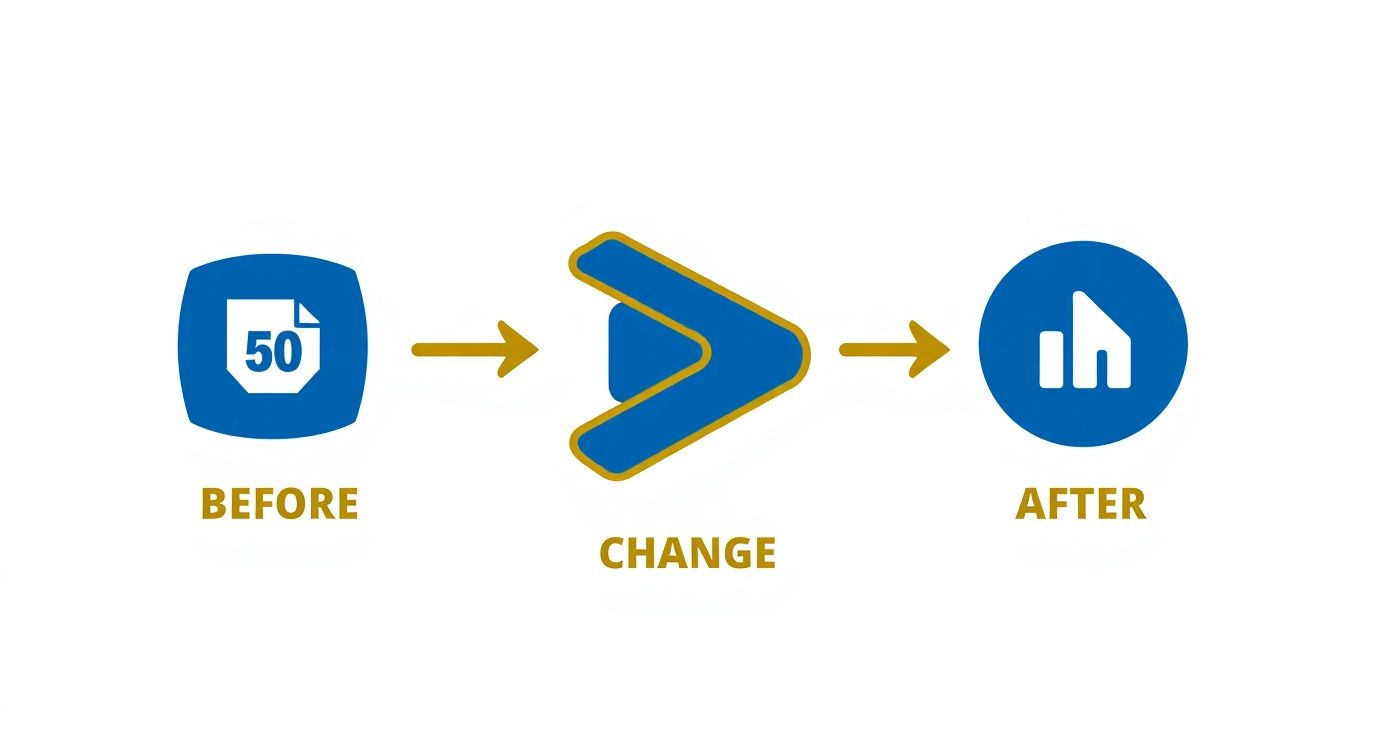
This visual really captures how the modern process is more direct, empowering international entrepreneurs to be the sole decision-makers in their ventures.
Solidifying Your Legal and Physical Presence
Once your initial and external approvals are in place, it’s time to make things official. This means drafting and notarising your company's legal documents. For an LLC, this will be your Memorandum of Association (MOA); for a professional licence, it’s typically a Local Service Agent (LSA) agreement. The MOA is your company’s constitution, spelling out the shareholding structure and rules of operation.
At the same time, you'll need to secure a physical office. A mainland company must have a registered physical address, and your tenancy contract—known as an Ejari—has to be registered with the Real Estate Regulatory Agency (RERA). This isn't optional; it's a mandatory requirement to get your final licence.
A common pitfall I’ve seen is entrepreneurs signing a lease for an office that isn't actually approved for their specific business activity. Always, always verify that the building is compliant with DET regulations for your licence type before you sign anything.
Your physical office is also directly tied to your visa eligibility. The number of employment visas your company can apply for often depends on the size of your office. Generally, more square footage means a higher visa quota, which is something to keep in mind if you're planning to grow your team.
Final Submission and Licence Issuance
You're in the home stretch now. The final phase involves gathering all your documents into one comprehensive package for the DET.
This file should include:
- The completed and signed application form.
- Your Initial Approval Certificate.
- All necessary external approvals from other government bodies.
- The notarised MOA or LSA agreement.
- Your registered Ejari (tenancy contract).
- Passport copies for all shareholders and partners.
After the DET reviews and approves your submission, they’ll issue a payment voucher for the licence fees. Once that's paid, you'll receive your official trade licence. The whole process, from reserving your name to having the licence in hand, usually takes about one to three weeks. The exact timeline depends on your business activity and how quickly you can get those external approvals sorted. With a dedicated partner offering 24/7 support, you'll always have a clear picture of where you are in the process, ensuring everything moves along smoothly.
Understanding the Real Costs and Financials

Alright, let's talk about the money. Getting a clear picture of the financials is absolutely crucial for a successful Dubai mainland business setup, and it goes way beyond the initial trade licence fee you see advertised. To avoid nasty surprises down the line, you need to budget for everything—from one-off government charges to the expenses that will pop up every single month.
A solid financial plan covers all the bases. Think of it in layers. You have the foundational government service fees for your trade name and initial approval, plus the notary public fees for getting your Memorandum of Association (MOA) officially authenticated. These are the table stakes to even get your application started, but they're just the tip of the iceberg.
Breaking Down the Core Setup Costs
The biggest variable in your startup budget? Almost always, it's the office space. A mainland company needs a physical, registered address, and the price tag on that can swing wildly depending on location and size. This isn't just about paying rent; it's a fundamental compliance requirement.
Beyond your lease, you’ll need to budget for these non-negotiable costs:
- Government Approvals: Your business activity might require special permits. For example, a healthcare clinic needs a nod from the Dubai Health Authority, and a restaurant needs approvals from the Food Safety Department. Each of these comes with its own fee.
- Notary and Legal Fees: Getting your MOA drafted and notarised isn't just a suggestion—it's a critical legal step that requires professional services, and those come at a cost.
- Establishment Card: This is your key to hiring staff and processing visas. It's an essential document with its own government issuance fee.
Overlooking even one of these items can cause delays and blow your budget. This is exactly why getting a cost-effective, tailored setup plan from the get-go is so important.
Uncovering the Ongoing and Hidden Expenses
The spending doesn't stop once you have your licence. I’ve seen too many entrepreneurs get caught out by the recurring costs needed to stay compliant and operational. These are the so-called ‘hidden’ expenses that absolutely must be part of your long-term financial forecast.
The most significant one is the annual renewal of your trade licence. It’s not a one-and-done fee; it's a yearly commitment. On top of that, many mainland companies have to go through a mandatory annual financial audit, which means bringing in an accredited auditing firm.
The real cost of a Dubai mainland business setup isn't just the initial investment. It's the total cost of ownership over the first one to three years, including renewals, visas, audits, and operational overheads. Planning for this full cycle is the key to sustainable growth.
Then there's the cost of your team. Every time you hire someone, you're looking at fees for an entry permit, medical test, Emirates ID application, and visa stamping. Smart budgeting means thinking ahead about your hiring plans and factoring these visa costs in from day one.
Real-World Cost Scenarios
Let's make this tangible. A professional services firm, like a marketing consultancy, might have lower initial costs for external approvals. However, it will still need a professional office space that suits its brand. Its major ongoing expenses will be the annual licence renewal and staff visas.
Now, compare that to a trading company that imports goods. It's a completely different ball game. They'll face extra costs like warehouse space, customs registration, and specific approvals from Dubai Customs. Their operational costs will naturally be higher due to logistics and inventory, making their financial planning much more complex.
The cost structure is a make-or-break factor for investors. Entrepreneurs have to look past the licence fee and map out every financial component. For instance, mainland companies are required to have a physical office of at least 200 square feet. With prime Dubai office space running anywhere from AED 40 to AED 120 per square foot annually, rent is a serious line item. Because your visa eligibility is tied to office space, scaling your workforce means scaling this expense. Don't forget, mainland entities often face mandatory annual financial audits—a requirement many free zone companies don't have. You can dive deeper into this with the complete guide to Dubai business setup costs.
Getting Your Business Up and Running After the Licence Arrives
Getting that trade licence in your hands is a huge milestone. It feels like you’ve crossed the finish line, and in many ways, you have. This is the government’s official green light for your business. But think of it less as the end of the road and more as the start of the real journey: turning your licensed entity into a living, breathing business.
Now, the real work begins. You’ll be dealing with immigration, labour departments, and banks. While your licence from the Department of Economy and Tourism (DET) gives you the right to trade, a few more crucial pieces are needed before you can hire staff, open a bank account, and operate fully.
Let’s break down what you need to tackle next.
First Things First: The Establishment Card
Before you even think about hiring anyone, you need to get your company’s Establishment Card. This is non-negotiable. Essentially, this card registers your new company with the immigration authorities—the General Directorate of Residency and Foreigners Affairs (GDRFA), to be precise.
Without it, you can't apply for a single visa. Not for yourself as the investor, and certainly not for any employees. It’s the official link between your business and the country's immigration system, and it’s the key that unlocks your ability to build a team.
A lot of new business owners assume the trade licence is the golden ticket for hiring. The reality is, the Establishment Card is what really matters. It's the absolute prerequisite for sponsoring any residence visas under your company.
My advice? Get this sorted out immediately after your licence is issued. Any delay here creates a major bottleneck, and you’ll find yourself unable to bring on the people you need to launch.
The Visa Application Journey
Once your Establishment Card is secured, you can start the visa process. This applies to your own investor visa as well as any employee visas you need. The procedure is pretty much the same for everyone and follows a clear, step-by-step path to formalise residency in the UAE.
Here’s a look at how it typically plays out:
- The Entry Permit: This is the first step. It's an electronic permit that lets someone either enter the UAE for employment or, if they're already here, change their visa status without leaving the country.
- The Medical Fitness Test: After the status change, every applicant has to go for a medical test at a government-approved health centre. It’s a standard screening for specific communicable diseases.
- Emirates ID Biometrics: Next up is a visit to an Emirates ID service centre. Here, the applicant provides their fingerprints and a photo. This is essential for issuing the Emirates ID card, which is your primary form of identification in the UAE.
- Visa Stamping: This is the final step. Once the medical results are back and the biometrics are done, the residence visa is stamped directly into the applicant's passport. This confirms their legal residency, usually for one or two years.
It’s a multi-stage process that demands careful timing and coordination. As specialists, we manage this from start to finish, making sure every document is submitted correctly and every appointment is booked to keep things moving smoothly.
Opening Your Corporate Bank Account
The last major hurdle to becoming fully operational is opening a corporate bank account. You can't run your business finances through your personal account—it's unprofessional and a compliance nightmare. You need a dedicated corporate account to accept client payments, pay suppliers, and keep your bookkeeping clean for accounting and tax purposes.
Choosing the right bank is a strategic decision. Don't just walk into the nearest branch. You need to consider things like their minimum balance requirements, how well they understand your specific business activity, what they charge for international transfers, and the quality of their online banking platform.
To get started, you'll need a solid file of documents ready to go. Typically, the bank will ask for:
- Your complete trade licence and company registration papers
- The Memorandum of Association (MOA)
- Passport and visa copies for all company shareholders
- A solid business plan and company profile
UAE banks are serious about compliance and their Know Your Customer (KYC) checks. A poorly prepared application can lead to long delays or even rejection. A comprehensive file that clearly outlines what your business does and what your financial projections look like will dramatically speed things up. We help our clients put this file together, tapping into our relationships with various banks to make the process as painless as possible.
Should You Hire a Business Setup Specialist?
Let's be honest, tackling a Dubai mainland business setup by yourself is a tough road. While you can technically go it alone, you'll quickly find yourself buried in complex legal requirements, a mountain of specific documents, and endless back-and-forth with various government departments.
This is where bringing in a corporate service provider shifts from being an expense to a smart investment in getting your business off the ground smoothly.
An experienced specialist does so much more than just push papers. They're your guide on the ground, steering you clear of the common mistakes that can delay your launch or, even worse, land you with hefty fines. Right from the start, they provide critical advice on choosing the right legal structure and business activities, making sure your company is built on a solid, compliant foundation from day one.
The Real Value of Having an Expert in Your Corner
Think of a business setup consultant as your dedicated project manager for launching your company. They take ownership of the entire process, freeing you up to concentrate on what really matters: your business plan, market research, and lining up your first clients.
Their established relationships with authorities like the Department of Economy and Tourism (DET) and other ministries can genuinely speed up approvals. What might take you weeks of chasing can often be sorted in days.
A good consultant will handle everything, including:
- Advising on the best company structure to make the most of UAE tax benefits.
- Managing all the paperwork for your trade name reservation and initial approvals.
- Securing any special external approvals needed from other government bodies.
- Helping you draft and notarise your Memorandum of Association (MOA).
- Walking you through the often-tricky process of opening a corporate bank account.
Here’s a key piece of advice from my own experience: The biggest advantage of working with a pro is the peace of mind that every step is done right the first time. This expertise eliminates the frustrating delays and surprise costs that can kill your momentum.
Ultimately, picking the right partner is about ensuring a seamless launch. As specialists in mainland company formation across Dubai and Abu Dhabi, we’ve built our reputation on providing practical, cost-effective setup solutions.
With 24/7 support, our team is always on hand to answer your questions and keep the process moving. This lets you launch your venture with total confidence and clarity, ready to enjoy the significant financial advantages available to international entrepreneurs in the UAE.
Got Questions? We've Got Answers
Setting up a business on the Dubai mainland comes with a lot of moving parts, and it’s natural to have questions. We’ve been through this process countless times with clients, and a few key queries always pop up. Here are the straight-up answers to help clear the air.
What’s the Real Cost to Get Started?
The total investment can really vary, mostly depending on your business activity and, crucially, your office space. While government fees for the licence itself are fairly standard, your office rent will be the biggest variable.
All in, you should probably budget somewhere between AED 12,000 and AED 25,000 for the initial setup. This range typically covers all the necessary government registrations and initial services to get you off the ground.
How Quickly Can I Get My Licence?
Things move pretty fast here. From the moment you reserve your company name to having the trade licence in your hands, you’re usually looking at about five to ten business days.
What can sometimes stretch this timeline are the external approvals. If your business needs a green light from a specific ministry or government authority, we’re a bit at the mercy of their processing times. But for most standard setups, it's a quick turnaround.
Is 100% Foreign Ownership a Real Thing on the Mainland?
Yes, it absolutely is. This was a game-changing reform for entrepreneurs. For the vast majority of commercial and professional activities, you can now own 100% of your company without needing a local Emirati partner.
This shift to full foreign ownership is easily one of the biggest draws for international investors. It means you have total control, can repatriate all your profits without issue, and have far greater security over your investment from day one.
Are There Any Limits on How Many Visas I Can Get?
On the mainland, your visa eligibility is tied directly to the size of your physical office. It’s a simple rule: the more office space you have, the more employee visas you can apply for.
This offers a ton of flexibility that you don't always find in free zones, which often come with rigid visa packages. As your team expands, you can simply lease a larger office to increase your visa quota.
Ready to plant your flag in the heart of the UAE's economy? As the Best Corporate Service Provider in Dubai, Abu Dhabi & Sharjah, we are specialists in both Mainland and Freezone Company Formation. Our 24/7 support service ensures we are always here when you need us, providing cost-effective business setup solutions tailored to your needs so you can enjoy the full UAE tax benefits for international entrepreneurs.
📞 Call Us Now: +971-52 923 1246
💬 WhatsApp Us Today for a Free Consultation or Get your free consultation today!