
Let’s get straight to the point. When people talk about a Dubai offshore company, they’re not talking about setting up a shop or office in the Emirates. Instead, think of it as a strategic headquarters for your international business that happens to be legally registered in a UAE jurisdiction like JAFZA or RAK ICC.
Its entire purpose is to conduct business exclusively outside the country. It’s a powerful tool for managing global transactions, protecting your assets, and handling international trade from a secure, tax-efficient base.
What Is a Dubai Offshore Company, Really?

At its core, a UAE offshore company is a specialised instrument for international investors and entrepreneurs. It’s a distinct legal entity, completely separate from its owners. This separation creates a vital firewall, shielding your personal wealth from any business debts or legal issues.
Unlike mainland or free zone companies that are set up to tap into the local UAE market, an offshore company is legally prohibited from doing so. Its true value lies in facilitating your global operations from a jurisdiction known for its stability, solid reputation, and tax-neutral environment.
Who Actually Benefits from This?
This structure isn’t for everyone; it’s a tailored solution for specific, international business needs. You’ll find it’s a perfect fit if you are:
- An International Trader: You’re juggling import/export deals across several countries and need a central hub for invoicing, but don’t need a physical presence in the UAE.
- A Global Consultant: You provide services to clients all over the world and want to manage your earnings through an efficient corporate structure.
- An Investment Holder: You’re looking to consolidate a diverse portfolio of international stocks, bonds, or other assets under a single, protective holding company.
- A Property Investor: You own real estate in different countries and need a central entity to manage rental income and capital gains efficiently.
Put simply, if your revenue comes from outside the UAE and you want to manage it with the highest degree of confidentiality and tax efficiency, this is the structure you’ve been looking for.
Understanding the Key Boundaries
It’s absolutely critical to grasp the bright line that separates an offshore company from other UAE business types. The frameworks offered by jurisdictions like RAK ICC and JAFZA Offshore have cemented the UAE’s status as a global business destination.
While the setup cost for a Dubai offshore company typically falls between AED 12,500 to over AED 20,000, it comes with clear limitations. These entities are not permitted to trade within the UAE, can’t rent a local office, and don’t grant eligibility for UAE residence visas. This is the main difference that sets them apart from mainland and free zone companies. You can find out more about how this comparison impacts your business strategy.
Think of an offshore company as your international business headquarters. It’s legally domiciled in the UAE but operationally focused on the rest of the world. You get the legal and financial perks of a Dubai registration without being tied to local trade.
This clear separation is precisely what gives it its unique power. It grants you access to a secure legal system and a world-class banking sector, all while giving you 100% foreign ownership and complete command over your global enterprise.
Choosing Your Jurisdiction: JAFZA vs RAK ICC

So, you’ve decided an offshore company in Dubai is the right move for your international goals. That’s a big step. Now comes the next crucial choice: where exactly to set it up? In the UAE, the conversation almost always narrows down to two powerhouses: the Jebel Ali Free Zone Authority (JAFZA) and the Ras Al Khaimah International Corporate Centre (RAK ICC).
This isn’t about which one is “better” in a general sense. It’s about which one is the perfect fit for you. Each jurisdiction is built with different strengths, designed to serve different business ambitions. Are you looking to own property, keep costs down, or prioritise operational speed?
Getting this choice right from the very beginning is fundamental. It will set the tone for your company’s capabilities and how it can grow. Let’s dig into what makes each of them tick.
JAFZA Offshore: The Prestige and Property Play
When you think of established, globally respected free zones, JAFZA is often the first name that comes to mind. It’s one of the oldest and most prestigious in the world. An offshore company registered here just carries a certain weight—a hallmark of credibility that can open doors with international banks, partners, and clients.
But here’s its true standout feature: a JAFZA offshore company is the only one that can own real estate in Dubai. For international investors wanting to hold their Dubai properties in a clean, tax-efficient corporate structure, this is an absolute game-changer.
- Ideal For: High-net-worth individuals, serious property investors, and large corporations needing a premium legal address.
- Key Advantage: It’s the exclusive path for an offshore company to directly own property in designated areas of Dubai.
- Reputation: Carries a powerful brand image that immediately signals stability and credibility on the world stage.
Simply put, if your primary goal is to manage a Dubai property portfolio through an offshore entity, JAFZA isn’t just an option; it’s your only option.
RAK ICC: The Hub for Flexibility and Cost-Efficiency
RAK ICC has carved out a fantastic reputation for itself by being modern, incredibly flexible, and budget-friendly. It has quickly become the go-to for a huge range of international activities, from global trading and consulting services to asset protection and holding company structures.
What really attracts entrepreneurs is how straightforward and fast the setup process is. The initial setup fees and annual renewals are significantly lower than JAFZA’s, making it a perfect fit for startups, SMEs, and consultants who need a solid legal framework without the premium price tag.
RAK ICC is the nimble, economical choice. It’s built for modern entrepreneurs who need a fast, flexible, and affordable offshore solution for their global operations, especially when Dubai property ownership isn’t part of the plan.
This laser focus on efficiency and accessibility has made it the jurisdiction of choice for a massive number of international business owners.
JAFZA Offshore vs RAK ICC: A Head-to-Head Comparison
To really see the contrast, putting them side-by-side makes the differences crystal clear. Your final decision will likely come down to one or two of these key points.
| Feature | JAFZA Offshore | RAK ICC |
|---|---|---|
| Primary Use Case | Owning Dubai real estate, holding companies for large corporations. | International trade, consulting, asset protection, general holding. |
| Real Estate Ownership | Permitted to own property in approved areas of Dubai. | Not permitted to own real estate directly in Dubai. |
| Setup Cost | Generally higher, reflecting its premium status. | More cost-effective and budget-friendly for startups and SMEs. |
| Annual Renewal Fees | Higher annual fees for maintenance and registered agent. | Lower recurring annual costs, making it more economical long-term. |
| Reputation | Highly prestigious, globally recognised brand. | Excellent modern reputation for flexibility and efficiency. |
| Setup Speed | The process can be more detailed and may take slightly longer. | Known for a faster and more streamlined incorporation process. |
At the end of the day, it all boils down to your core objective. If your strategy is built around Dubai real estate, JAFZA is the only viable path forward. For nearly every other international business activity where cost, speed, and agility are the top priorities, RAK ICC presents an exceptionally strong and compelling alternative.
Unlocking the Strategic Benefits of a UAE Offshore Company
Global entrepreneurs and investors are looking to the UAE for their offshore needs for good reason, and it’s about much more than just ticking boxes on a checklist. Think of an offshore company in Dubai not just as a legal registration, but as a powerful tool kit designed for international growth, wealth protection, and operational freedom. It’s a solid foundation for anyone doing business across borders.
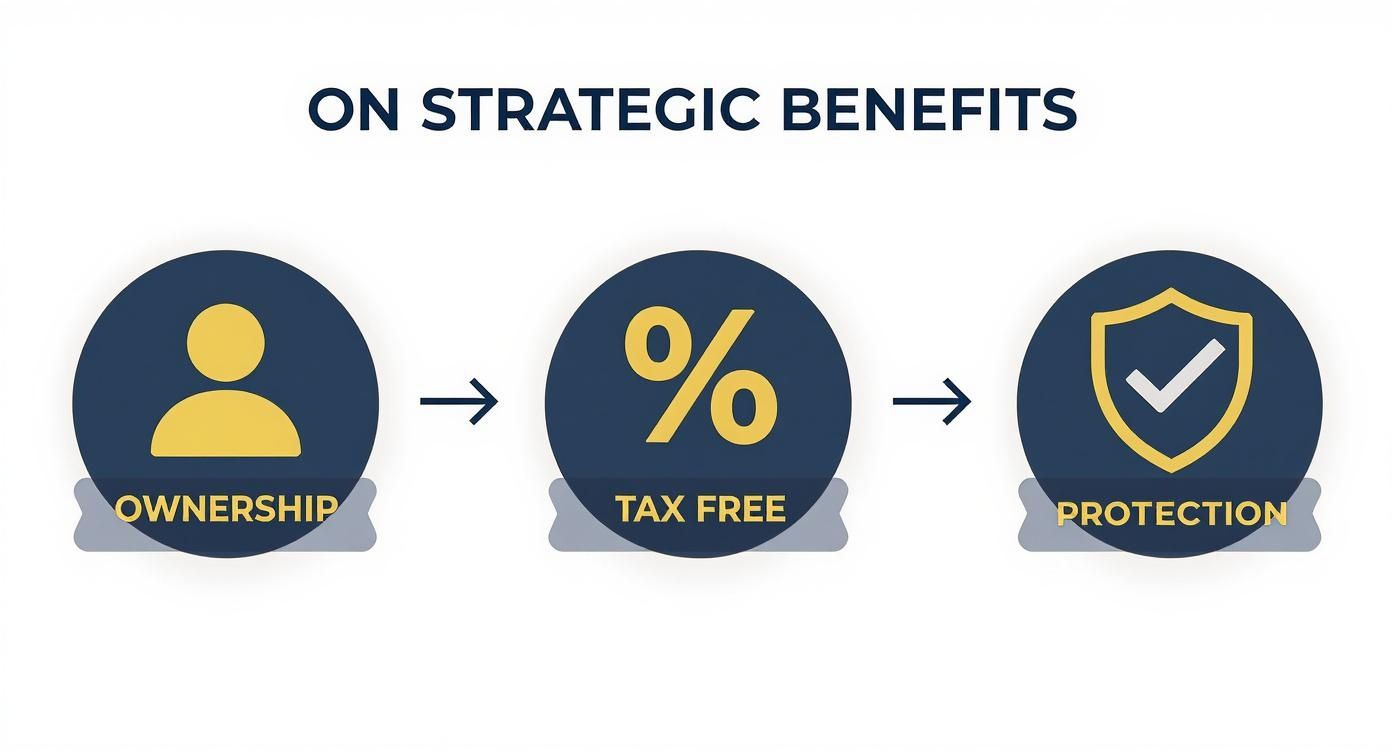
Right off the bat, the most powerful advantage is 100% foreign ownership. This gives you complete and total control over your business, its assets, and its future—no local partner or sponsor required. For any international entrepreneur, that kind of autonomy is non-negotiable. It lets you make quick, independent decisions that line up perfectly with your global goals.
The Power of a Tax-Neutral Environment
Let’s be honest, the biggest draw is the UAE’s incredible tax framework. An offshore company here is completely free from both corporate and personal income taxes. This tax-neutral status means you can bring your international profits back home in full, giving you the freedom to reinvest and grow your capital without a hefty tax bill slowing you down.
This isn’t just a small perk; it’s a massive financial advantage. It frees up cash that you’d otherwise be earmarking for taxes, making your business more competitive on the world stage and giving you a secure way to manage your personal wealth. Plus, the simplicity of it all cuts down on the administrative headaches that usually come with international operations.
The real value of a UAE offshore company is its role as a secure, private, and tax-efficient hub for your global financial life. It legally separates your international dealings from both your home country and the local UAE market.
This structure is a huge part of what makes Dubai a major force in the global economy. The UAE’s business outlook for 2025 is predicting strong GDP growth of 4.5%, with the non-oil sector set to expand by around 5%. This growth is being fired up by industries like trade, logistics, and financial services—all of which rely heavily on offshore structures for their international arms. You can learn more about the UAE’s strong economic forecast on tme-services.com.
Robust Asset Protection and Confidentiality
Beyond the tax savings, a UAE offshore company acts as a serious shield for your assets. When you place your international investments, property, or intellectual property into an offshore entity, you create a legal firewall between them and your personal liabilities. It’s a protective barrier that can stand up against potential creditors, messy legal fights, or political instability in other parts of the world.
For high-net-worth individuals and business owners, that kind of asset protection brings invaluable peace of mind. It ensures your wealth is kept safe and managed within a stable legal system, away from outside risks.
Confidentiality is the other side of the coin. The names of the company’s shareholders and directors aren’t put on a public register, which guarantees a high level of privacy. This discretion is critical for many investors who’d rather manage their affairs without the world watching, letting them conduct business quietly and securely.
When you put it all together, the case is pretty clear:
- Total Control: You keep full ownership and call all the shots.
- Maximum Tax Efficiency: No UAE corporate or income taxes to worry about.
- Enhanced Security: Your assets get a legal layer of protection from external claims.
- Guaranteed Privacy: Your shareholder and director details stay private.
Beyond just optimising your tax position, a UAE offshore company can also be used for more specific strategies, like exploring the various captive insurance company benefits for smarter risk management. At the end of the day, setting up an offshore company in Dubai is a strategic move that gives you a secure, efficient, and private framework for managing and growing your international wealth.
Setting Up Your Offshore Company: A Practical Walkthrough
Getting an offshore company in Dubai up and running might seem daunting, but it’s really a straightforward process when you know the steps. Forget the idea of a complex maze; think of it as a clear path from A to B. If you follow the map, you’ll move from idea to a fully registered business smoothly.
The key is breaking it all down into manageable chunks. We’ll walk through everything, from picking and reserving your company name to submitting the final paperwork. It’s a structured journey, not a bureaucratic nightmare, especially if you have an expert in your corner. Let’s start with the basics: gathering your documents.
Your Essential Documentation Checklist
Before you can file anything, you need to get your paperwork in order. This is the foundation of your company’s legal file. While the specifics can differ slightly between jurisdictions like JAFZA and RAK ICC, the core requirements are pretty consistent across the board.
A good corporate services provider will give you a precise list, but here’s what you’ll almost certainly need:
- Passport Copies: Clear, valid copies for every shareholder and director.
- Proof of Residence: A recent utility bill or a bank statement (usually dated within the last three months) for each individual to confirm where they live.
- A Concise Business Plan: This doesn’t have to be a massive document. Just a brief outline explaining what your offshore company will be doing internationally.
- Bank Reference Letter: Some authorities might ask for a simple letter from the personal bank of the shareholders, just to show they are in good standing.
Honestly, having these documents organised from the get-go is the single best thing you can do to speed up the process. Nine times out of ten, any delays are simply down to missing or incorrect paperwork.
Making Sense of Modern Compliance Rules
Once you’re set up, you’re not quite done. Your offshore company has to operate under modern international compliance standards. The UAE is serious about its reputation as a transparent and well-regulated global business hub, and two regulations you absolutely need to get right are the Economic Substance Regulations (ESR) and Ultimate Beneficial Ownership (UBO) declarations.
These aren’t just box-ticking exercises. They’re in place to prove your company has a legitimate purpose and isn’t a front for anything illegal.
Ultimate Beneficial Ownership (UBO): This is all about transparency. You have to formally declare the actual people—the “natural persons”—who ultimately own or control the company. It pulls back the corporate curtain so authorities know who is really in charge.
Economic Substance Regulations (ESR): This is a framework to ensure your company is actually doing real business. If you’re involved in certain “Relevant Activities” (like being a holding company or managing intellectual property), you need to prove you have genuine substance in the UAE.
For many, navigating these rules is the trickiest part of running an offshore entity. They were created to align the UAE with global standards from organisations like the OECD, specifically to fight tax evasion and money laundering. Get it wrong, and you could face some hefty penalties.
This is exactly why working with a specialist is so important. A great corporate services provider does more than just register your company; they keep you compliant. They’ll manage your UBO register, assess your ESR duties, and handle all the filings for you. This kind of proactive management means you can focus on your business, confident that your offshore company in Dubai is 100% compliant and protecting both your assets and your reputation.
Mapping Out Your Costs and Timelines
When you’re launching an international business, the last thing you want are financial surprises. Let’s get straight to the point about what it really costs and how long it takes to set up your offshore company in Dubai. This isn’t about a single, flat fee; it’s a combination of what you pay upfront and what you’ll budget for each year to keep things running smoothly.
A clear understanding of these expenses right from the start makes all the difference. Your biggest cost driver will be the jurisdiction you choose—the globally recognised JAFZA is a different investment from the more budget-friendly RAK ICC. On top of that, any extra services you might need, like nominee directors or a more complex ownership structure, will also shape the final number.
Breaking Down the Costs: Setup vs. Annual
Think of your company’s finances in two clear stages. Getting this right from day one is key to managing your cash flow and avoiding any headaches down the line.
- One-Time Setup Fees: This is the initial outlay to get your company officially born and bred. It covers the essentials like government registration fees, drafting your core legal documents (the Memorandum and Articles of Association), and finally, getting that all-important Certificate of Incorporation in your hands.
- Annual Recurring Costs: To keep your company compliant and in good standing, there are yearly renewal fees. These cover your mandatory registered agent and office address, plus the government’s own renewal charges. These are predictable, fixed costs you can easily plug into your annual budget.
It’s a bit like buying a car. The setup fee is the sticker price you pay to drive it off the lot. The annual costs are the insurance and registration you pay every year to keep it legally on the road.
An offshore company isn’t a one-off transaction; it’s an ongoing investment in your global business strategy. Budgeting for both the initial setup and the yearly upkeep ensures your company stays compliant and ready for business, no interruptions.
A Realistic Timeline: From Paperwork to Launch
One of the best things about setting up a UAE offshore company is just how quickly it can happen. While every situation has its own nuances, the process is generally fast and straightforward, especially when you have an expert guiding you past the usual bumps in the road.
Here’s what a typical timeline looks like, step by step:
- Consultation & Document Prep (1-3 Days): It all starts with a conversation and gathering the necessary paperwork—think passport copies, proof of address, and the like. We’ll check everything to make sure it’s exactly what the registrar needs to see.
- Name Reservation & Submission (1-2 Days): Once your documents are in order, we reserve your preferred company name and formally submit the application to the right authority, whether that’s JAFZA or RAK ICC.
- Approval & Incorporation (3-5 Business Days): The registrar reviews everything. Once they give the green light, they issue the Certificate of Incorporation. At this point, your offshore company officially exists.
- Post-Incorporation Steps (Varies): With your company formed, the next step is often opening a corporate bank account. This part of the timeline can vary, usually taking a few weeks, as banks have their own detailed due diligence processes to complete.
All in all, you can expect to have your offshore company in Dubai fully incorporated and ready for action within one to two weeks. This speed gives you the power to move forward with your international plans quickly and with total confidence.
Why Going It Alone with a Dubai Offshore Setup is a Bad Idea
Thinking about setting up your offshore company in Dubai by yourself? It might seem like a smart way to cut costs at first, but this path is often riddled with expensive mistakes and frustrating delays. The world of offshore regulations, compliance, and banking is a tricky one, and the rules are always shifting. This is precisely why a specialist corporate service provider isn’t just a help—it’s essential.
Hiring an expert is about more than just getting someone to handle the paperwork. It’s about bringing a strategic partner onto your team. A seasoned professional has deep, practical knowledge of the UAE’s legal system, including the subtle but critical differences between jurisdictions like JAFZA and RAK ICC. Getting this right from the start saves you from common traps that could put your company’s legal standing or even its ability to operate at risk.
This Isn’t Just Registration; It’s a Partnership for Success
A good partner makes the whole process feel effortless. They’ll handle everything, from gathering and attesting your documents to making the final submission to the registrar. They become your go-to person, dealing with all the government departments so you don’t have to. This frees you up to focus on what you do best: running your business.
But their job doesn’t end once your company is incorporated. A true expert provides continuous support, making sure you stay on the right side of ever-changing rules like Economic Substance Regulations (ESR) and Ultimate Beneficial Ownership (UBO) filings. They’ll keep you ahead of annual renewal deadlines, protecting your company’s good standing and your reputation.
An expert corporate service provider transforms a confusing legal puzzle into a smooth business launch. They don’t just build your company; they build a foundation for your long-term success in the UAE’s international business scene.
Real Benefits, Real Peace of Mind
At the end of the day, working with a specialist is the smartest, most cost-effective way to get started. They ensure you can actually access the benefits you’re after, like the UAE’s tax advantages for international business owners. With their guidance, you can navigate the entire process of setting up your offshore company in Dubai feeling confident and secure.
To make this happen, you need to work with the best.
✅ Best Corporate Service Provider in Dubai, Abu Dhabi & Sharjah
✅ Specialists in Mainland Company Formation in Dubai & Abu Dhabi
✅ Specialists in Freezone Company Formation across the UAE
✅ 24/7 Support Service – Always here when you need us
✅ Cost-Effective Business Setup Solutions tailored to your needs
✅ Enjoy UAE Tax Benefits for International Entrepreneurs
📞 Call Us Now: +971-52 923 1246
💬 WhatsApp Us Today for a Free Consultation
Your Top Questions About Dubai Offshore Companies Answered
When you’re exploring international business structures, a lot of practical questions pop up. It’s completely normal. To give you the clarity you need, we’ve put together some straight-to-the-point answers to the questions we hear most often from entrepreneurs looking at a Dubai offshore company.
Can I Get a UAE Residence Visa with an Offshore Company?
This is easily the most common question, and the answer is a simple, direct No. An offshore company is a vehicle for international business and asset holding, plain and simple. It doesn’t provide a pathway to a UAE residence visa for its owners or employees.
Because these companies are legally barred from doing business inside the UAE, they can’t sponsor staff or apply for residency permits. If a UAE visa is a top priority for you, you’ll need to look at setting up a mainland or free zone company instead.
Can My Offshore Company Own Property in Dubai?
Yes, it can—but there’s a very important catch. Only an offshore company registered with the Jebel Ali Free Zone Authority (JAFZA) is legally allowed to own real estate in Dubai’s designated freehold areas.
This is a specific, powerful advantage offered by JAFZA. It makes it the go-to choice for international investors who want to hold their Dubai property assets within a secure and tax-efficient corporate shell. A RAK ICC offshore company, by contrast, does not offer this capability.
Are These Companies Really Tax-Free?
Within the UAE, yes. A Dubai offshore company is completely exempt from both corporate and personal income taxes here. It’s an incredibly efficient way to manage international profits.
However, and this is crucial, “tax-free” in the UAE doesn’t automatically mean tax-free back home. You are still responsible for complying with the tax laws and reporting rules in your country of tax residence. Those obligations are entirely separate from the benefits your company gets in the UAE.
Think of it this way: an offshore company wipes out your tax liability in the UAE, but it doesn’t erase your personal tax duties in the country where you live and pay taxes. It’s always a smart move to speak with a tax advisor to make sure you’re compliant globally.
What’s the Real Difference Between an Offshore and a Free Zone Company?
The core difference boils down to one thing: where you can do business. Their purposes are completely different.
- Offshore Company: This is built for one thing—international activity. It cannot trade within the UAE, offer services locally, or have any physical presence here. It’s a tool for global trade, holding assets, and managing investments outside the Emirates.
- Free Zone Company: This structure is designed to operate both internationally and within its designated free zone in the UAE. It’s the right choice if you need UAE residence visas, an office space, and the ability to do business with other companies inside the UAE’s massive network of free zones.
As you plan your business setup, you’ll also be thinking about personal matters. For helpful information on healthcare as an expat, you can look into health insurance options for expatriates in the United Arab Emirates.
Getting these distinctions right is the first step to building a solid international business strategy. At 365 DAY PRO Corporate Service Provider LLC, our job is to give you the expert advice you need to pick and set up the structure that perfectly matches your ambitions. Find out more at https://365dayproservices.com.