Starting a business in the UAE is one of the best investment opportunities for entrepreneurs and foreign investors. Company Formation in Dubai Mainland allows businesses to operate anywhere in the UAE, work with government entities, and expand into both local and international markets without geographical restrictions.
Whether you are launching a startup, opening a branch office, or expanding an existing business, Business Setup in Dubai Mainland provides flexibility, credibility, and long-term growth opportunities. With 100% foreign ownership available for most business activities, obtaining a Dubai Mainland Trade License has become easier than ever.
This comprehensive guide explains everything you need to know about Company Formation in Dubai Mainland, including the registration process, legal structures, business licenses, costs, required documents, benefits, and post-setup requirements. By the end of this guide, you’ll have a clear understanding of how to successfully complete your Company Registration in Dubai Mainland and start your business with confidence.
Thinking about starting a business in Dubai? Your first big decision is where to set it up. A mainland company gives you a golden ticket to the entire UAE market, lets you work with government departments, and allows you to set up shop in prime commercial spots. For any entrepreneur with an eye on long-term growth and a solid local footprint, this is often the way to go.
Benefits of Company Formation in Dubai Mainland
Choosing the right jurisdiction isn’t just a box-ticking exercise; it’s the foundation of your entire venture in Dubai. Whether you go for a mainland, free zone, or offshore setup will directly shape who you can do business with, how you can operate, and how easily you can scale. It’s a strategic choice that sets the course for your company’s future.
Mainland companies, registered with the Department of Economy and Tourism (DET), offer the most flexibility. They give you the freedom to trade directly with the local market, open a physical shop anywhere in Dubai, and even bid on lucrative government contracts.
Dubai Mainland vs Free Zone vs Offshore Company Formation
To really get this right, you need to see how these setups stack up against each other on the big things: ownership, scope of business, and visa eligibility. Each one is built for a different kind of business.
Let’s say you’re a consulting firm wanting to work with clients across Dubai and Abu Dhabi. A mainland licence is a no-brainer. But if you’re a digital marketing agency with clients all over the world, a free zone might be a more streamlined, cost-effective choice.
A mainland setup is your gateway to the entire UAE economy. It offers unparalleled flexibility for businesses that plan to grow locally, establish a physical presence, and engage directly with the domestic market.
The UAE’s business landscape is booming. With around 200,000 new economic licences issued nationwide recently, it’s clear the region is a magnet for entrepreneurs. Dubai consistently leads the pack in new business registrations, with Abu Dhabi and Sharjah following, which speaks volumes about its world-class infrastructure and supportive regulations. You can dig deeper into the official data on business registrations in the UAE to see this trend for yourself.
To make things clearer, let’s break down what each option really means for you in practical terms.
Mainland vs Free Zone vs Offshore Which is Right for You
Deciding on your company’s legal structure is a critical first step. This table lays out the core differences to help you see which one aligns best with your business goals.
| Feature | Dubai Mainland Company | Free Zone Company | Offshore Company |
|---|---|---|---|
| Business Scope | Trade freely across the entire UAE and internationally. | Operations are generally restricted to the specific free zone and international markets. | Permitted to conduct business only outside the UAE. |
| Ownership | 100% foreign ownership is available for most commercial and professional activities. | 100% foreign ownership is a standard feature. | 100% foreign ownership is standard. |
| Office Requirement | A physical office space with a registered Ejari is mandatory. | Flexible options, including flexi-desks or virtual offices, are often available. | No physical office is required within the UAE. |
| Visa Eligibility | Visa allocation is generally unlimited, depending on the size of your office space. | The number of visas is typically limited and tied to your chosen package or office size. | Not eligible to apply for UAE residence visas. |
| Government Contracts | Fully eligible to bid on and undertake government projects and contracts. | Generally not eligible to work directly with government bodies. | Not eligible for any UAE government contracts. |
Ultimately, the best choice depends entirely on your business model. A mainland setup is for those who want to be deeply integrated into the local economy, a free zone is great for international trade, and an offshore company serves as an asset-holding entity.
Alright, you’ve decided on a mainland setup. What’s next? This is where we get into the nitty-gritty of your company’s DNA: its legal structure and business licence.
These aren’t just boxes to tick on a form. They’re the core decisions that will dictate how you operate, what your personal liability looks like, and how you engage with the wider UAE market. Getting this right from the start saves you a world of trouble down the line. Let’s break down the common choices you’ll face.
Legal Structures for Company Formation in Dubai Mainland
Your company’s legal structure is essentially its ownership blueprint. It defines who owns what and who is responsible for what. For most entrepreneurs coming into Dubai, it usually boils down to one of these three.
- Limited Liability Company (LLC): This is, by far, the most popular choice for a reason. An LLC forms a distinct legal entity, separating your personal assets from the business’s finances. If the company incurs debt, your personal savings and property are protected. Think of a business importing electronics or an e-commerce brand—where financial risk is just part of the game—an LLC is a perfect fit.
- Sole Establishment: As the name suggests, this is a one-person show. It’s owned and run by a single individual, making it ideal for professionals like a freelance marketing consultant or an independent IT specialist. You get total control, but there’s a crucial trade-off: your personal assets and business liabilities are one and the same.
- Civil Company: This structure is tailor-made for partnerships of qualified professionals. We’re talking about doctors, lawyers, accountants, or engineers who want to team up. It lets multiple partners pool their expertise to operate as a single firm, like a boutique architectural studio or a specialised legal consultancy.
Choosing your legal entity is a bit like picking a vehicle. An LLC is the sturdy SUV you’d want for a long-haul trading journey, offering protection and capacity. A Sole Establishment is more like a zippy city car—perfect for a solo professional navigating the urban business scene.
Types of Business Licenses in Dubai Mainland
Once you’ve settled on a structure, you need the right licence from Dubai’s Department of Economy and Tourism (DET). This licence officially authorises your specific business activities. A mismatch here can bring your operations to a grinding halt and lead to hefty fines. As you think about your company’s framework, it’s also a good time to get familiar with broader topics like offshore tax structures for online businesses.
Let’s look at the main licence categories.
- Commercial Licence: This is your ticket to trade. If your business involves buying and selling goods—whether you’re opening a retail store, importing and exporting, or running a general trading company—this is the licence you’ll need.
- Professional Licence: This one is for businesses built on intellectual capital and specialised, skill-based services. A software development house, a management consultancy, or a digital marketing agency would all require a professional licence. It’s directly tied to the expertise of the people running the show.
- Industrial Licence: If you’re making things, you need an industrial licence. It covers any activity related to manufacturing, processing, packaging, or assembling physical goods. Picture a food processing plant, a furniture workshop, or a textile factory.
Here’s a real-world example: A company that builds custom software for clients needs a Professional Licence. Why not a Commercial one? Because its core business is providing an intellectual service, not selling a pre-packaged product off the shelf. Nailing this distinction is one of the keys to a smooth and successful company formation in Dubai mainland.
Steps for Company Formation in Dubai Mainland
Alright, so you’ve picked out the right legal structure and licence for your business. What’s next? Now comes the part where we deal directly with the various government authorities. This stage of your company formation in Dubai mainland isn’t just about ticking boxes; it’s a series of strategic moves that need to align perfectly with Dubai’s rules to ensure a smooth start.
First things first, you need to pinpoint your exact business activities from the official list provided by Dubai’s Department of Economy and Tourism (DET). This is a foundational decision because it legally defines what your company can and cannot do. For example, you can’t set up a marketing agency and then start trading electronics on the side without officially adding that activity to your licence. Every service you offer or product you sell must be pre-approved.
Laying the Groundwork: Your Name and Legal Docs
With your activities chosen, the immediate priority is to lock in your trade name. Think of this as more than just a brand; it’s your legal identity in the UAE. It has to be unique and follow the DET’s guidelines—no religious references, for instance, and it should genuinely reflect what your business does. This is where a good corporate service provider is worth their weight in gold; they can instantly check if your name is available and handle the reservation, steering you clear of common pitfalls that lead to rejection.
Once your name is reserved, it’s time to draft the Memorandum of Association (MOA). For an LLC, this is a critical legal document. It spells out everything from the company’s structure and how shares are divided to the internal rules of operation. I’ve seen firsthand how a poorly written MOA can cause serious shareholder disputes later on. Getting professional help here is non-negotiable to make sure it’s watertight and protects everyone involved.
This infographic breaks down the typical pathways for the main licence types, whether you’re in commerce, professional services, or industry.
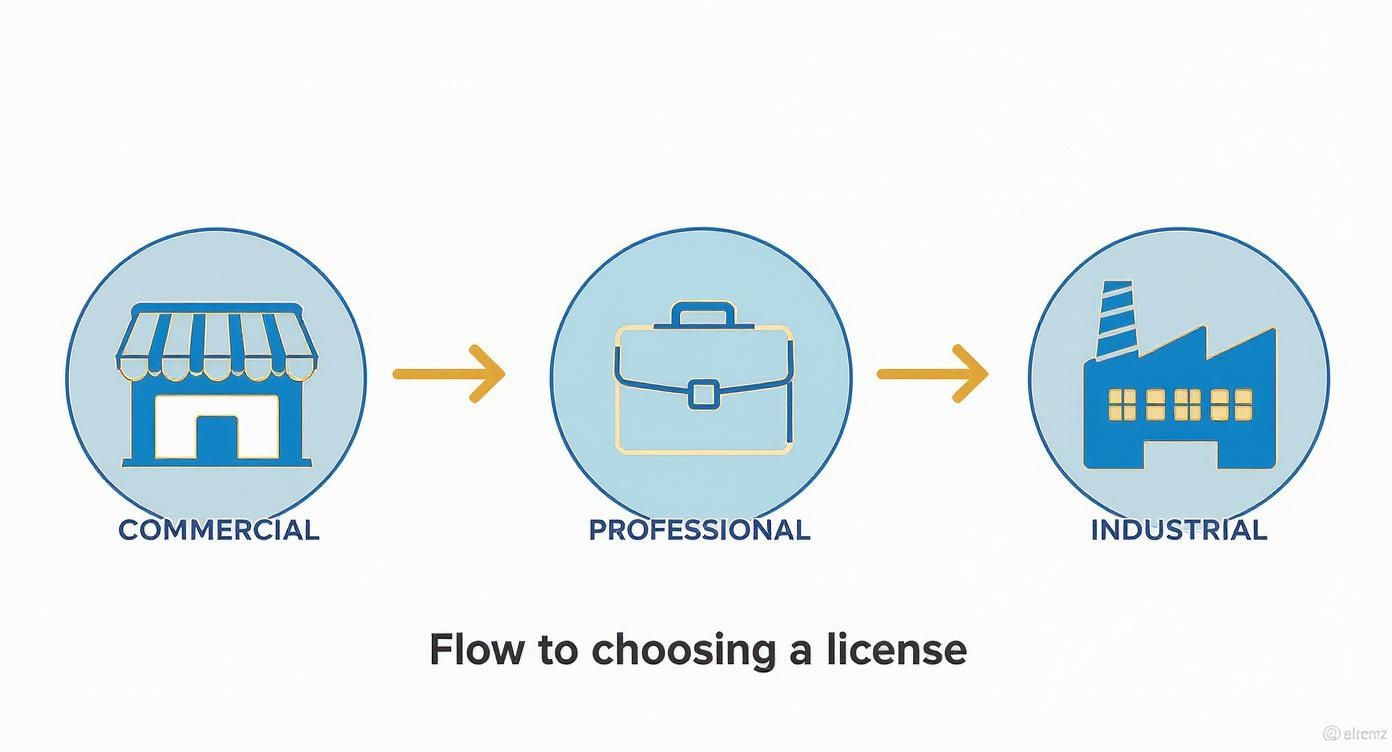
As you can see, the type of business you run dictates the entire setup process, making that initial choice of activity so important.
Securing Your Place in Dubai
A mainland company isn’t just a name on paper; it needs a physical address in Dubai. We’re not talking about a simple P.O. box. You’ll need a proper tenancy contract for an office, shop, or warehouse, which must then be registered with the Ejari system. This registration is what officially validates your lease with the authorities, and you absolutely cannot get your trade licence without it.
Think of a corporate service provider as your local guide through this maze. They know the shortcuts, speak the language of the authorities, and can spot potential hurdles a mile off, making the whole journey far more efficient.
Juggling all these approvals and documents—from DET paperwork to legal drafting and securing a registered office—can quickly become a headache. Each step has its own set of rules and plenty of room for error. This is precisely why having a specialist handle your mainland company formation is such a smart move. They’ll manage the back-and-forth with government bodies, ensuring everything is submitted correctly the first time.
Let’s not forget one of the biggest draws for entrepreneurs moving here. As you work through the setup, it’s worth remembering that you can enjoy UAE tax benefits for international entrepreneurs, a huge advantage that contributes to your business’s long-term success.
Cost of Company Formation in Dubai Mainland
Before you dive into setting up your company on the Dubai mainland, it’s absolutely critical to get a firm grip on the financials. A realistic budget is your best friend here—it’ll save you from nasty surprises and give your business the solid financial start it deserves. The total cost isn’t a single, neat figure; it’s a mix of government fees, service charges, and those recurring costs that keep the lights on.
The Initial Outlay
Your first wave of expenses will be payments to the government to get your business legally recognised. Think of these as the foundational costs. You’ll start with fees for reserving your trade name and getting the Initial Approval Certificate from the Department of Economy and Tourism (DET). These steps officially kickstart your application.
If you’re forming an LLC, you’ll also have costs for drafting and notarising your Memorandum of Association (MOA). This is a crucial legal document, so you can’t cut corners on it.
One-Time vs Recurring Expenses
I always advise clients to split their budget into two buckets: the one-time setup costs and the annual running costs. The first gets your doors open, and the second keeps them open.
- One-Time Costs: These are the initial hurdles. You’re looking at payments for your trade name, initial approval, MOA attestation, and the final licence issuance fee. Once you have your licence, you’ll also need to pay for your Establishment Card and process any investor visas.
- Recurring Costs: The biggest recurring expense is almost always your office rent, which needs to be registered with Ejari. Then there’s the annual trade licence renewal—a non-negotiable cost to stay legal and operational in Dubai.
So many entrepreneurs get fixated on the initial setup fees, but they completely forget about the annual renewals and office rent. These are major commitments that will absolutely affect your cash flow down the line, so plan for them from day one.
To give you a clearer picture, let’s walk through a sample cost breakdown for a small, service-based LLC. Remember, these are just estimates. The final numbers can change based on your specific business activity and the type of office you need.
Sample Cost Breakdown for a Dubai Mainland LLC
The table below gives you a practical look at the expenses you can expect. A good tip is to find a partner that offers Cost-Effective Business Setup Solutions tailored to your needs. They can often bundle these services into a single, predictable package, which really helps avoid any unexpected financial shocks.
| Expense Item | Estimated Cost (AED) | Frequency |
|---|---|---|
| Trade Name Reservation | 700 – 800 | One-Time |
| Initial Approval Certificate | 250 – 350 | One-Time |
| MOA Attestation | 1,000 – 1,500 | One-Time |
| Office Rent (Ejari) | 15,000+ | Annual |
| Trade Licence Issuance | 10,000 – 15,000 | One-Time |
| Establishment Card | 2,000 – 2,500 | Annual |
| Investor Visa Processing | 3,500 – 4,500 | Per Visa (2-year validity) |
| Licence Renewal | 12,000 – 16,000 | Annual |
As you can see, the costs are spread out, with some being upfront and others coming back every year. Having this breakdown in hand helps you build a much more accurate financial forecast for your new venture.
Post-Registration Requirements After Company Formation in Dubai Mainland
Getting that trade licence in your hands is a fantastic feeling, a real milestone in your company formation in Dubai mainland journey. But it’s important to see it as the starting pistol, not the finish line. Now the real work begins to get your company fully operational and ready to trade legally.
First things first, you need to get an Establishment Card. You can think of this as your company’s official ID card for the immigration and labour departments. Without it, you’re at a standstill – you can’t sponsor visas for yourself, your business partners, or any employees you plan to hire. It’s the essential key that unlocks your ability to build a team and secure your own residency here in the UAE.
Activating Your Residency and Team Visas
Once the Establishment Card is sorted, you can dive into the visa process. This journey usually starts with applying for your own investor or partner visa, which cements your legal residency as a business owner in Dubai. The whole thing is a very structured process, with several mandatory steps that have to be done in the right order.
Here’s a look at what you’ll go through:
- Entry Permit Issuance: This is the green light from immigration that allows you to start the rest of the in-country process.
- Change of Status: If you’re already in the UAE on a tourist visa, for example, this step officially changes your status to a resident-in-process.
- Medical Fitness Test: Every new resident has to complete a standard medical check-up, which screens for certain communicable diseases.
- Emirates ID Biometrics: You’ll visit a government service centre to give your fingerprints and have your photo taken for your mandatory Emirates ID card.
After all that is ticked off, the residence visa gets stamped in your passport, and your Emirates ID is couriered to you. When you’re ready to hire staff, they’ll go through this same fundamental process, allowing you to build your team legally and efficiently.
Opening Your Corporate Bank Account
While you’re working on the visas, you should also be focused on opening your corporate bank account. This is absolutely non-negotiable for running a business here. You need it to manage finances, get paid by clients, and keep clean records for compliance purposes. Be prepared, though – UAE banks have very strict due diligence and Know Your Customer (KYC) requirements.
A common mistake is underestimating how interconnected these final steps are. A small delay in your visa application can easily cascade, holding up the final approval for your bank account. It all needs to move forward together.
You’ll need to pull together a solid file of documents, including your new trade licence, Memorandum of Association, copies of all shareholder passports, and, more often than not, a detailed business plan. The bank’s compliance team will review everything thoroughly before giving you the go-ahead.
This final stretch can feel like a lot of admin, which is why having access to a 24/7 Support Service – Always here when you need us can make all the difference. Working with a reliable partner helps you navigate these last hurdles without hitting frustrating and costly delays.
FAQs – Company Formation in Dubai Mainland
When you’re looking into company formation in Dubai mainland, you’re bound to have a few questions. It’s a big step. Let’s tackle some of the most common ones we hear from entrepreneurs just like you, so you can move forward with confidence.
Can a Foreigner Really Own 100% of a Mainland Company?
Yes, they absolutely can. This is a game-changer. Thanks to some major legal updates, foreign investors can now hold 100% ownership for a huge range of business activities, both commercial and professional.
Gone are the days when you needed a local Emirati sponsor holding a 51% stake in your company. For most ventures, that’s no longer a requirement, putting international entrepreneurs firmly in the driver’s seat.
Just keep in mind that a handful of strategic sectors, think banking or oil and gas, still have specific ownership rules. It’s always a good idea to double-check the specifics for your particular business activity.
What’s the Real Minimum Cost for a Mainland Licence?
This is the million-dirham question, isn’t it? Pinpointing an exact “minimum” is tough because the final figure really hinges on your specific business activity, your mandatory office space, and how many visas you’ll need.
That said, for a straightforward professional licence paired with a cost-effective flexi-desk office, you’re looking at a starting point somewhere between AED 12,000 and AED 20,000.
This initial outlay usually covers the essentials:
- Booking your trade name
- Getting the initial approval
- The licence issuance fee itself
- Registering a basic office lease (Ejari)
Remember, this is just for the setup. It doesn’t factor in things like visa processing fees or other costs that pop up after you get your licence, so planning a complete budget is key.
How Long Does It Actually Take to Get Set Up?
The good news is that the process has become incredibly quick. If you have all your paperwork in order and ready to go, you could be holding your final trade licence in as little as 3 to 7 working days.
From my experience, the biggest hold-ups are almost always related to paperwork. Missing documents or needing extra approvals from specific government ministries for certain activities can slow things down. This is where having an expert guide can really save you time and headaches.
Dubai’s business-friendly approach is clearly working. The city is a magnet for global entrepreneurs, a fact highlighted when the Dubai Chamber of Commerce welcomed over 35,000 new member companies in just the first six months of a single year. This isn’t just a number; it’s a testament to the city’s incredible appeal. You can get a better sense of Dubai’s remarkable business growth and why now is such an exciting time to be here.
Ready to make your Dubai mainland company a reality without the usual stress? At 365 DAY PRO Corporate Service Provider LLC, we live and breathe this stuff. We’ll handle everything from licensing to visas, making the entire process smooth and straightforward.
- Best Corporate Service Provider in Dubai, Abu Dhabi & Sharjah
- Specialists in Mainland Company Formation in Dubai & Abu Dhabi
- Specialists in Freezone Company Formation across the UAE
- 24/7 Support Service – Always here when you need us
- Cost-Effective Business Setup Solutions tailored to your needs
- Enjoy UAE Tax Benefits for International Entrepreneurs
📞 Call Us Now: +971-52 923 1246
💬 WhatsApp Us Today for a Free Consultation
Contact us today for a free consultation and a personalised setup plan that fits your budget!