Ready to take the leap into professional independence in one of the world’s most dynamic business hubs? The first step is securing your Dubai freelance visa. This involves getting a freelance permit from a designated free zone, which then opens the door to your residence visa. Think of the permit as your professional license and the visa as your key to living and working legally in the UAE.
Launching Your Freelance Career in Dubai
The idea of freelancing in a city as vibrant as Dubai is catching on, and for good reason. The city has rolled out the red carpet for independent professionals, creating a unique ecosystem where talent can thrive. The Dubai freelance visa is central to this vision.
This isn’t your typical work visa tied to a single employer. Instead, it’s a purpose-built permit that frees you to operate as a sole practitioner. You can legally offer your skills and services to various clients, both within the UAE and internationally. It’s a modern solution for the modern professional.
Why Dubai is a Top Choice for Freelancers
The pull of Dubai goes far beyond its stunning skyline and year-round sunshine. For freelancers and entrepreneurs from around the globe, the city presents a powerful business case.
Here are a few of the biggest draws:
- Zero Personal Income Tax: This is a game-changer. You get to keep 100% of what you earn, a massive financial advantage.
- 100% Business Ownership: As a freelancer, you have full control. There’s no requirement for a local partner, giving you complete autonomy over your business.
- Family Sponsorship: Once your own residence visa is in hand, you can sponsor your spouse and children, making it easy to bring your family with you.
- Access to a Global Market: Positioned at the crossroads of East and West, Dubai offers incredible networking opportunities and access to a diverse, international client base.
Dubai is actively cementing its status as a global freelance hub with increasingly flexible visa options. The city’s freelance permits, available through key free zones like Dubai Media City, Dubai Internet City, and Dubai Design District, are a core part of its strategy to double the economy by 2033. It’s a welcoming environment—over 90% of freelancers in the UAE report higher job satisfaction than in traditional jobs.
Understanding Your Path Forward
Your journey starts with a key decision: setting up in a free zone or on the mainland. For most freelancers, free zones are the way to go. These are special economic areas tailored to specific industries—like tech, media, or design—and offer the most direct path to getting your permit.
The Dubai freelance visa requirements can look a bit daunting at first, but they break down into a clear, step-by-step process. Partnering with a business setup specialist can make the entire application feel seamless and straightforward.
Once you’re up and running, you’ll want to showcase your new status professionally. Learning how to effectively list self-employment on your resume is a great next step to attract high-calibre clients.
For a free consultation on starting your freelance journey in Dubai, Abu Dhabi, or Sharjah, don’t hesitate to contact our specialists. We are the best corporate service provider in Dubai, Abu Dhabi & Sharjah, offering cost-effective business setup solutions tailored to your needs.
Figuring Out if You Qualify for a Dubai Freelance Permit
Before you get lost in the paperwork, the very first thing to do is make sure you actually qualify. The requirements for a Dubai freelance visa are set up to bring in talented people in specific fields that are booming in the city. Knowing if your skills match their needs is the key to getting your application approved without a hitch.
Generally, you’ll find that the authorities give the green light to freelancers in sectors that fuel Dubai’s modern, knowledge-driven economy.
Think along the lines of:
- Media and Entertainment: This is a broad category, covering everyone from journalists and content creators to animators and sound engineers.
- Technology and IT: If you’re a software developer, data scientist, UX/UI designer, or a cybersecurity pro, you are definitely in demand.
- Education and Training: This includes consultants, e-learning specialists, and anyone involved in curriculum development.
- Design and Fashion: Graphic designers, interior designers, and fashion consultants are also a great fit for Dubai’s creative scene.
Now, while having a university degree is a big plus, it’s not always a deal-breaker. The authorities also place a high value on real-world experience. If you have a powerful portfolio or a CV that shows you’ve been excelling in your field for years, that can often stand in for a formal degree. It’s all about proving you’ve got the skills to make it as a freelancer.
Your Application Path: Inside or Outside the UAE?
Where you are right now—and whether you’re already employed—will change how you approach the application. The process looks a bit different if you’re applying from overseas compared to someone who’s already living and working in the UAE.
Let’s say you’re currently employed in Dubai and want to start a side hustle as a freelancer. In this case, you’ll need to get a No Objection Certificate (NOC) from your current employer. This is basically a formal letter stating they’re okay with you taking on freelance projects. It’s a non-negotiable step to stay on the right side of the law and avoid any trouble with your current job.
On the other hand, if you’re applying from your home country, the process is a bit more straightforward since you won’t need an NOC. Instead, the focus shifts to proving you can support yourself financially. You’ll need to provide documents like bank statements to show the authorities you have the funds to get settled in Dubai while you find your first clients.
Our team can offer a free chat to walk you through your specific situation and check your eligibility. As specialists in mainland company formation in Dubai & Abu Dhabi, we’ll clarify the exact dubai freelance visa requirements for you, making sure your application is solid.
Gathering Your Essential Application Documents
Getting your documents in order is arguably the most critical step in the entire Dubai freelance visa process. A well-prepared application sails through, while a sloppy one hits snags and delays. I always tell my clients to think of this phase as building the foundation of their new venture in the UAE – get it right from the start, and everything else becomes much easier.
It’s not about drowning in paperwork; it’s about precision. Each document has a job to do, whether it’s proving who you are, what you do, or that you can support yourself financially.
The Non-Negotiables: Core Documents
These are the absolute must-haves for every single applicant. No matter your profession or which free zone you’re applying to, you’ll need to have these ready to go.
- Passport & Visa Copies: You’ll need a clear, coloured scan of your passport. Crucially, it must have at least six months of validity left. If you’re already living in the UAE on another visa, you’ll also need a copy of your current residence visa page.
- Passport-Sized Photo: This needs to be done right. We’re talking about a professional photo with a pure white background, meeting the specific dimensions and standards set by the UAE government. A selfie from your phone won’t cut it – think formal, no smiling, and make sure your face is clearly visible.
- Your CV: Dust off your CV and give it a polish. It should scream “freelance expert.” Customise it to highlight the specific skills, projects, and work history that directly relate to the services you plan to offer in Dubai.
Proving Your Credentials: Supporting Evidence
Once the basics are covered, it’s time to prove you’re a legitimate professional. This is where you show the authorities that you’re not just testing the waters, but you’re a serious expert in your field with a solid plan.
I can’t stress this enough: your professional portfolio or a simple business plan is your chance to sell yourself. This document should clearly lay out what you do, who you’ll be doing it for, and a basic financial projection. It’s your opportunity to make a strong first impression.
Here’s what else you’ll need to back up your application:
- Academic and Professional Qualifications: Gather up your university degrees, diplomas, and any professional certifications. If these were issued from outside the UAE, be prepared for the possibility that they may need to be attested, which is a separate process.
- Proof of Financial Stability: The authorities want to see that you can support yourself. A reference letter from your bank or your last three to six months of bank statements usually does the trick. This is a key requirement for the Dubai freelance visa.
- Health Insurance: This is mandatory. You cannot get a residence visa in Dubai without valid health insurance that meets the Dubai Health Authority (DHA) standards. As you’re pulling your other documents together, make sure you’ve sorted this out. You can find helpful information on securing the right kind of travel health insurance for remote workers and freelancers.
Our specialists can offer a free consultation to go through your documents with you, making sure everything is perfectly in line for a successful application. With our 24/7 support service, we are always here when you need us.
Choosing the Right Free Zone for Your Business
Picking the right free zone is probably the single most important decision you’ll make on your journey to freelancing in Dubai. This isn’t just a bureaucratic step; it’s a strategic move. Each free zone is a dedicated hub, an ecosystem built for a specific industry. Your choice will place you right in the middle of the action for your field.
Think of it like choosing where to live. If you’re a financial whiz, you’d probably want to be near the financial district. A filmmaker? You’d head to the studio hub. The same principle applies here. The right free zone gives you more than a piece of paper; it offers a community, valuable networking events, and an environment where your work is understood and valued.
A Focus on Industry Clusters
Dubai did something clever by organising its free zones into industry-specific clusters. This creates a natural synergy, putting you elbow-to-elbow with potential clients, collaborators, and even the big players in your industry. Figuring out these clusters is the best way to start shortlisting your options.
- Tech & IT Professionals: Look no further than Dubai Internet City (DIC). This is the heart of the tech scene, home to everyone from global giants to the scrappiest startups. It’s the place to be for software developers, data scientists, and cybersecurity specialists.
- Media & Creative Minds: For journalists, marketers, and content creators, Dubai Media City (DMC) is the long-established hub. Its infrastructure is built specifically to support the media world, from production to PR.
- Designers & Artists: Dubai Design District (d3) is where the city’s creative soul lives. It’s a vibrant, inspiring space for fashion designers, graphic artists, and architects.
No matter which of these specialised zones you lean towards, some of your initial paperwork will be the same. The basics are pretty universal across the board.
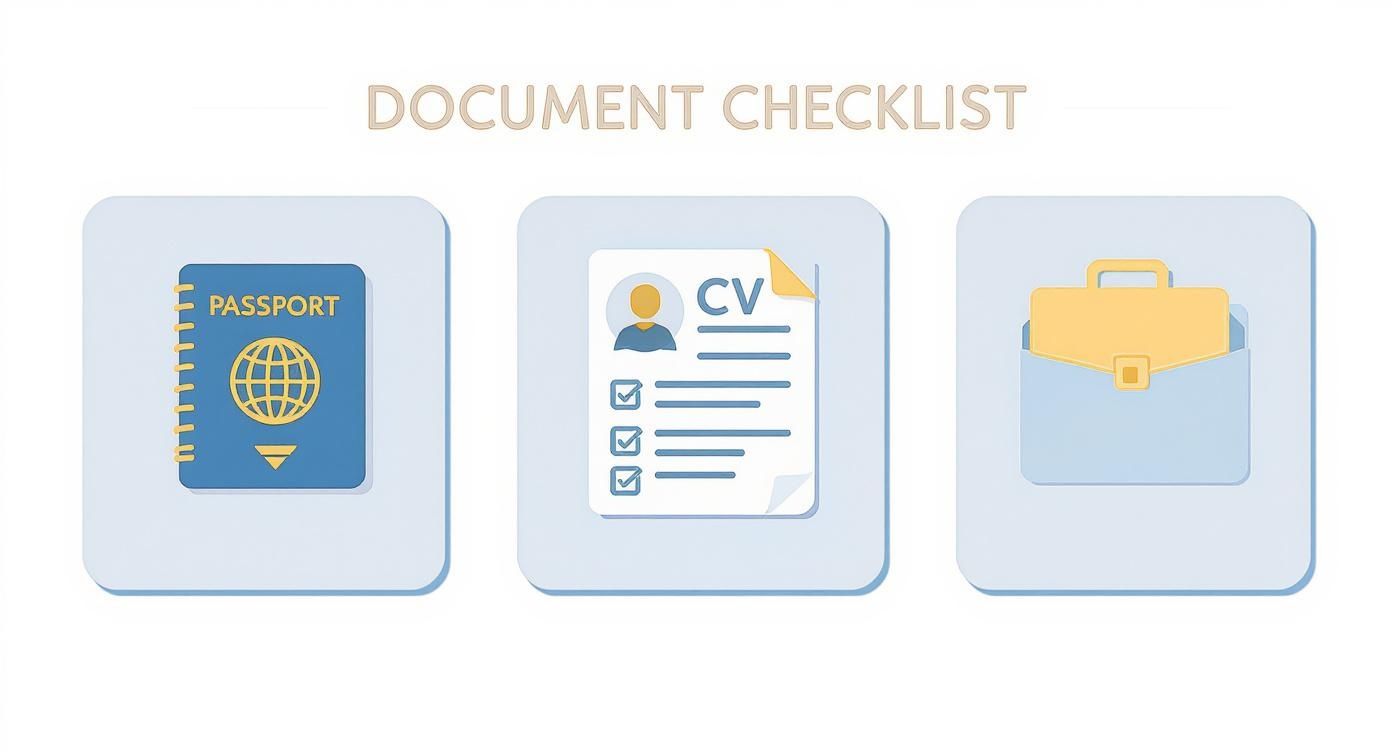
This checklist—your passport, a solid CV, and a portfolio showcasing your work—is the foundation of your application, so it’s wise to get these documents polished and ready to go early on.
Comparing Top Dubai Free Zones for Freelancers
While finding the right industry fit is crucial, you also have to look at the numbers and the perks. I’ve worked with countless freelancers, and the best choice always balances cost with community benefits. The table below breaks down some of the most popular options to give you a clearer picture.
| Free Zone | Best For (Industries) | Estimated Annual Permit Cost (AED) | Key Benefits |
|---|---|---|---|
| Dubai Media City (DMC) | Media, Marketing, Communications, Content Creation | AED 10,000 – 15,000 | Established industry network, media-specific infrastructure, access to major events. |
| Dubai Internet City (DIC) | IT, Software Development, Tech Consultancy, E-commerce | AED 10,000 – 15,000 | Home to major tech companies (Google, Microsoft), strong tech community, innovation focus. |
| Dubai Design District (d3) | Fashion, Art, Graphic Design, Architecture, Interior Design | AED 12,000 – 18,000 | Creative ecosystem, state-of-the-art facilities, hosts major design events like Dubai Design Week. |
| Dubai Knowledge Park (DKP) | Education, Training, HR Consultants, Life Coaches | AED 9,000 – 14,000 | Hub for academic and professional development, access to corporate training clients. |
| RAKEZ | General Trading, E-commerce, Media, Education | AED 7,000 – 12,000 | More cost-effective, broader range of activities allowed, simplified setup process. |
| Fujairah Creative City | All creative fields, Media, Tech, Consulting | AED 8,000 – 13,000 | Flexible and affordable, no in-person visit required for setup, broad activity list. |
This comparison should help you weigh your options. Remember that some packages might include access to co-working spaces or other perks that could offset a slightly higher initial fee, so always read the fine print.
The UAE’s freelancer-friendly approach is no secret; it ranked 2nd in the world on the VisaGuide Digital Nomad Visa Index for a reason. This high ranking is a direct result of the straightforward process offered by these free zones.
Typically, the process starts by picking a zone that fits your profession and then applying online. Once you sort out the fees, which usually fall between AED 7,500 and AED 15,000, you’ll get your freelance permit. This is the golden ticket that makes everything legal and is the key to fulfilling the Dubai freelance visa requirements. For more on this, you can find some great insights about how Dubai attracts global talent on Maphomes Real Estate.
Choosing the right free zone is a strategic business decision. Look beyond the initial cost and consider the long-term value of the network, facilities, and industry-specific support you’ll gain.
Getting this right from the start means you’re not just licensed to work—you’re positioned to succeed. As specialists in Freezone Company Formation across the UAE, we see the impact of this decision every day. We’re happy to offer a free consultation to help you compare your options and find the perfect launchpad for your freelance ambitions.
Budgeting for Your Freelance Visa Costs
Let’s talk numbers. Getting a clear picture of the full financial commitment is one of the most important steps in planning your freelance move to Dubai. The total investment isn’t just one big fee; it’s a series of official costs that, when added up, lead to your final residence visa.
Budgeting for all of this upfront means you can move through the process smoothly, without any unwelcome financial surprises popping up along the way.
The Real Cost Breakdown
Think of the process in stages, with each stage having its own government fee. From getting your official permit to work to the final residency formalities, every step has a price tag.
While the exact figures can fluctuate a bit depending on which free zone you go with or if you opt for any fast-track services, the core costs stay pretty consistent.
Here’s a rundown of what you should be setting money aside for:
- Freelance Permit: This is your licence to operate and will be your single biggest outlay. The cost is determined by your chosen free zone.
- Establishment Card: This crucial card connects your freelance licence to the immigration system, which is what allows you to start the visa application for yourself.
- Visa Application Fee: This is the government charge for processing your entry permit—the initial step before you get your full residence visa.
- Medical Fitness Test: Every single person applying for a residence visa in the UAE has to go through a mandatory health screening.
- Emirates ID Application: This is for your official government ID card. You’ll need it for almost everything, from opening a bank account to signing a rental agreement.
- Visa Stamping: The grand finale! This is the physical stamping of the residence visa into your passport.
A classic mistake I see people make is only budgeting for the main freelance permit fee. To avoid getting caught out, I always advise clients to factor in an additional AED 4,000 to AED 5,000 just for the immigration and administrative costs that come after the permit is issued.
How Long Does It All Take?
It’s not just about the money; you also need a realistic timeline. Once you’ve submitted a complete application with all the right documents, you can generally expect to have your residence visa in your hands within three to five weeks.
This efficient system is a big reason why the UAE’s freelance market is booming, growing at an impressive 10% annually. The total cost for a visa package can range anywhere from AED 2,000 to AED 12,000, and once all your documents are in, the core processing is often wrapped up in 7–10 days. You can find some fascinating insights into how top UAE freelancers are earning up to AED 3,600 daily.
As specialists in this field, we focus on providing clear, cost-effective packages designed around your specific needs. With our 24/7 support, we’re here to make sure your journey is as straightforward and predictable as possible. International entrepreneurs especially can enjoy the UAE tax benefits that come with this visa.
Got Questions About the Freelance Visa? Let’s Clear Them Up
Even with the best guide, you’re bound to have a few lingering questions as you get into the nitty-gritty of the Dubai freelance visa process. It’s completely normal. To help you out, I’ve gathered the most common questions I get from freelancers and put together some straightforward, practical answers.
Can I Bring My Family With Me on a Freelance Visa?
Yes, you absolutely can, and it’s one of the best perks of this visa. Once your own residence visa is stamped and in your passport, you can start the process to sponsor your dependents, which typically means your spouse and children.
You’ll need to show proof of a certain minimum monthly income and have your official documents, like marriage and birth certificates, properly attested. It’s a great setup for professionals who want to move to Dubai without leaving their family behind.
Do I Need to Find a Local Emirati Sponsor?
Nope! This is a huge relief for most freelancers. When you get a permit from a Dubai free zone, you don’t need a local sponsor. This gives you 100% ownership of your freelance business and complete control over your work.
Think of it this way: the free zone authority essentially becomes your sponsor. This model cuts out a lot of complexity and lets you operate with the independence every freelancer needs.
A common mistake I see is people thinking the process is identical to a standard work visa. Remember, as a freelancer, you’re on your own for health insurance. It’s mandatory, and you must get a DHA-approved plan. Forgetting this step will bring your entire visa application to a dead stop.
What if My Application Gets Rejected?
It’s not common for a well-prepared application to be rejected, but it can happen. If it does, don’t panic. The authorities will usually tell you exactly why.
More often than not, rejections come down to simple, fixable issues:
- Missing documents or paperwork that wasn’t filled out correctly.
- Your freelance activity doesn’t quite fit the categories licensed by that specific free zone.
- The proof you provided of your financial standing wasn’t strong enough.
In most cases, you can just fix the problem and re-submit your application. This is where working with a professional can save you a lot of headaches—they make sure everything is perfect the first time around.
Can I Freelance if I Already Have a Full-Time Job?
Yes, many people do this. If you’re already a resident with a full-time job, you can still get a freelance permit to take on side projects legally.
The key piece of paper you’ll need is a No Objection Certificate (NOC) from your current employer. It’s just a formal letter stating they’re okay with you doing freelance work on the side. This is a fantastic way to test the waters, build up a client base, and eventually transition into full-time freelancing without any legal grey areas.
Getting your Dubai freelance visa doesn’t have to be a struggle. As the best corporate service provider in Dubai, Abu Dhabi & Sharjah, we specialise in both Mainland and Freezone company formation. We live and breathe this stuff, providing clear, cost-effective business setup solutions tailored to your needs. With our 24/7 support service, we are always here when you need us. Let us handle the admin so you can enjoy the UAE tax benefits for international entrepreneurs.
📞 Call Us Now: +971-52 923 1246
💬 WhatsApp Us Today for a Free Consultation