
Before you even think about booking flights or packing your bags, the very first—and most important—step in your UAE journey is figuring out which visa you actually need. Getting this right from the start saves you a world of headaches later on. The whole process really hinges on you picking the correct visa category for your specific situation.
Choosing the Right UAE Visa for Your Trip
Not all UAE visas are created equal. Far from it. Each one is designed for a very specific purpose, whether you're coming for a quick holiday, a business meeting, or making a long-term move to live and work here. I've seen countless applications get delayed or even rejected simply because the applicant chose the wrong visa type. It’s a common pitfall, but easily avoidable.
For most people just visiting, the tourist visa is the go-to option. These typically let you stay for 30 or 60 days and are perfect for holidays or visiting family. On the other hand, if you're just passing through, a transit visa is what you’ll need. These are much shorter, usually for 48 or 96 hours, and are strictly for travellers with a layover in the UAE.
Short-Term Visits vs. Long-Term Stays
Things get a bit more complex when you're planning to work or live here. An employment visa, for example, is a completely different ball game. This is sponsored by your employer in the UAE and is your first step towards getting a full residence permit. The application is far more detailed than a simple tourist visa request.
Then you have options for investors and entrepreneurs, like the coveted Golden Visa. This programme offers long-term residency for up to 10 years without needing a local sponsor, which is a huge deal. It’s the UAE’s way of attracting top talent and serious investment. If you're setting up a business, whether on the mainland or in a free zone, picking the right residency path is a fundamental business decision.
I always tell clients: navigating the rules around business setup and long-term residency is tricky. Working with the best corporate service provider in Dubai, Abu Dhabi & Sharjah can be a lifesaver. They’ll help you map out the best visa strategy that aligns perfectly with what you’re trying to achieve in the UAE.
To make this clearer, let's break down the main visa types in a simple table.
Quick Guide to Common UAE Visa Types
Here’s a side-by-side look at the most common visa categories to help you quickly identify which one fits your needs.
| Visa Type | Primary Purpose | Typical Duration | Sponsorship Required? |
|---|---|---|---|
| Tourist Visa | Leisure, holidays, visiting family/friends | 30 to 60 days | Yes (Airline, hotel, or travel agency) |
| Transit Visa | Short layover between flights | 48 to 96 hours | Yes (Your airline) |
| Employment Visa | Working for a UAE-based company | 2 years (renewable) | Yes (Your employer) |
| Golden Visa | Long-term residency for investors, entrepreneurs, exceptional talents | 5 to 10 years (renewable) | No |
This table shows just how different the options are, from a two-day stopover to a decade-long residency.
The image below gives a great visual summary of how the validity periods stack up against each other.
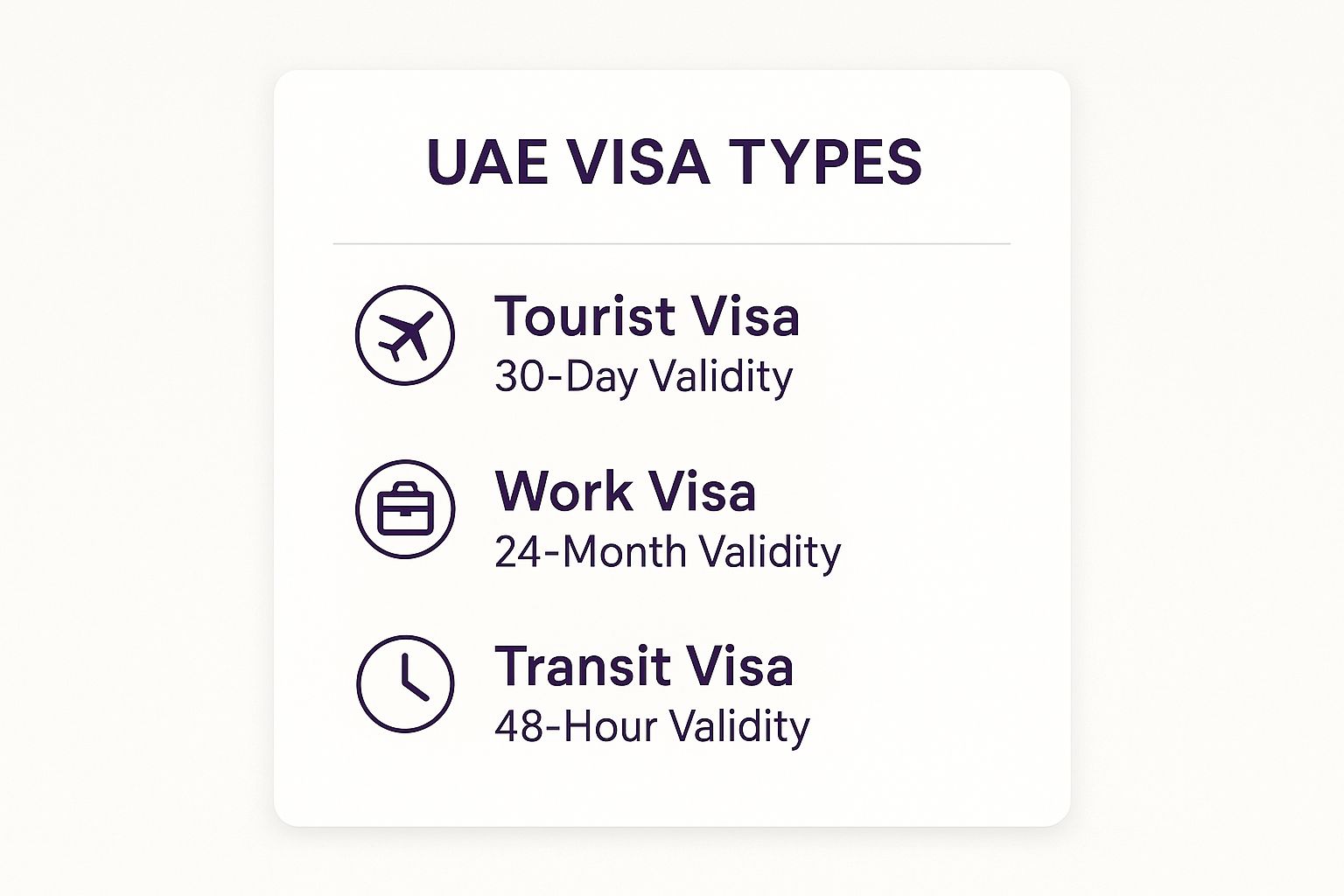
As you can see, there's a massive difference between a 48-hour transit permit and a 24-month work visa. It really drives home the point that your travel purpose dictates everything.
Making the Correct Choice
So, how do you make the final call? It all boils down to your personal plans. Just ask yourself three simple questions:
- Why am I going? Is it for a holiday, a job, or to start a business?
- How long will I be there? A weekend? A couple of months? Or are you moving for good?
- Do I have a sponsor? Most visas need one, whether it’s an airline, hotel, your new boss, or a family member already in the UAE.
Your answers will point you directly to the right visa. If you're heading specifically to Dubai, the rules can sometimes be a little different. For that, this specific guide on the Dubai visa process is a really useful resource. Nail this first step, and the rest of your application will feel much less daunting.
Getting Your Paperwork in Order for a Smooth Application
Once you've figured out which visa is the right fit, it's time to get down to the details. Honestly, a successful UAE visa application is all about preparation. Getting every single document perfectly organised is the best way to avoid frustrating delays or, worse, a rejection.
Think of it like this: you're building a case for immigration officials. They need a crystal-clear, verifiable snapshot of who you are and your reasons for visiting. I've seen applications get stuck for the smallest things—a blurry photo, a passport copy with a page missing. It really pays to be meticulous here.
The Absolute Essentials for Everyone
No matter which visa you're going for, a few documents are always required. Consider this your starting checklist.
- A Valid Passport: This is non-negotiable. Your passport must have at least six months of validity left from the day you plan to enter the UAE. They are incredibly strict about this. Make sure you've got a couple of blank pages in there, too.
- Passport-Sized Photos: The UAE has very specific rules for photos. They need to be recent (taken in the last six months), in colour, and shot against a plain white background. Your face has to be fully visible, so no glasses. Headwear is fine, but only for religious reasons.
Get these two items sorted first. Your application is a non-starter without them.
Showing Your Travel Itinerary and Purpose
Beyond proving who you are, you need to provide clear evidence of your travel plans. This shows the authorities that you have a genuine reason to visit and can support yourself during your stay.
You'll need a confirmed flight itinerary. This doesn't always mean you have to buy an expensive, non-refundable ticket before your visa is in hand. A confirmed booking reservation showing your planned arrival and departure dates is usually enough. You'll also need proof of where you're staying—this could be a hotel booking confirmation or, if you're staying with relatives, a letter of invitation from them.
The goal is to present a travel plan that makes sense. If your flight dates don't line up with your hotel booking or the visa duration you’ve requested, that’s a major red flag for immigration.
Documents from Your Sponsor
If you're applying through a sponsor (and not self-sponsoring with something like a Golden Visa), their documentation is just as important as yours. This is a key part of understanding how to apply for a UAE visa when a company, airline, or family member is involved.
Here’s what your sponsor will typically need to provide:
- If your sponsor is a person (like a family member): They'll need to submit a copy of their passport, their UAE residence visa page, and their Emirates ID.
- If your sponsor is a company (like your employer or a hotel): They'll need to provide copies of the company’s trade licence and its immigration card.
Making sure your documents and your sponsor's are complete and correct will make your application much stronger. It paints a clear picture of a well-supported visit, which makes an approval far more likely. For international entrepreneurs setting up a business and needing to handle sponsorships, our team provides 24/7 support service to make this process completely seamless.
Where and How to Apply for Your UAE Visa
Got all your documents in order? Great. Now for the most important part: actually submitting your visa application. The path you take here really depends on why you're coming to the UAE. The good news is there are several routes, and choosing the right one can make your life a lot easier.
For most tourists, the simplest method is to apply through a UAE-based airline. If you’ve booked your flights with Emirates or Etihad, they can act as your sponsor. This is a huge help. You just head to their website, find the visa application portal, and everything is handled in one place. It’s about as straightforward as it gets.
Finding the Right Application Channel
If you're not flying with a UAE carrier, or if you'd just rather have someone else manage the paperwork, working with a registered travel agency or hotel in the UAE is another excellent option. These pros handle visa applications day in and day out. They know the system, can spot potential red flags in your application before it’s submitted, and will deal with the authorities for you.
Now, if you're coming to the UAE for a job or to join family, the process works a bit differently. Your sponsor—which will be your employer or a family member already living here—drives the application. They’ll be the ones submitting everything through the official government channels.
There are two main portals they'll use:
- The GDRFA (General Directorate of Residency and Foreigners Affairs) portal is used for any applications related to Dubai.
- For all the other emirates, applications go through the ICA (Federal Authority for Identity, Citizenship, Customs & Port Security) Smart Services platform.
These systems are really designed for local users, which is why your sponsor's role is so crucial. As specialists in mainland company formation in Dubai & Abu Dhabi and freezone company formation across the UAE, this is precisely what we do for our clients. We manage the entire visa process, ensuring new employees can get started without a hitch.
Breaking Down the Costs
Let’s talk money. Budgeting for your visa is a must, and the costs can swing quite a bit depending on what you’re applying for. A standard 30-day tourist visa will typically set you back around AED 350. However, if you need a longer stay or want your application pushed through quickly, the price will go up.
It's worth noting that the UAE has tightened its review process recently. In the past, visa approval rates were incredibly high, around 98-99%. Now, rejection rates for tourists have climbed to about 5-6%. This shift means that getting your application right the first time is more important than ever. You can learn more about the common reasons behind UAE visa rejections to better prepare yourself and avoid losing your application fee.
Here’s a general idea of what to expect for fees:
| Fee Type | Description | Estimated Cost (AED) |
|---|---|---|
| Application Fee | This is the base government fee for processing your visa. | 350 – 1,500 |
| Express Service | Need it fast? Pay extra to get it processed in 24-48 hours. | Additional 100 – 200 |
| Service Charges | The fee charged by the airline, agency, or hotel handling it. | Varies by provider |
My best advice? Always get a full quote upfront. Service charges can vary wildly between providers, and you don’t want any nasty surprises messing with your travel budget.
A Path to Long-Term Residency: The Golden Visa
If you're looking to put down roots in the UAE for the long haul, the Golden Visa programme is your best bet. This isn't just another residency permit; it's a prestigious 10-year visa designed to attract the world's best and brightest—from visionary entrepreneurs to serious investors and exceptional talents who see the UAE as their base.
What really sets the Golden Visa apart is that it untethers you from the traditional employer-sponsorship model. It’s a self-sponsored visa, which means you have complete freedom to live, work, and study anywhere in the UAE without being tied to a specific company. This gives you an incredible amount of flexibility over your future, both personally and professionally.
Who Qualifies for the Golden Visa?
The great news is that the eligibility criteria have expanded recently, opening the door for more people than ever before. The programme is designed to welcome individuals who are actively contributing to the UAE's economic growth and innovation.
You'll find several main pathways to qualify:
- Real Estate Investors: This is a popular route. If you own a property valued at AED 2 million or more, you're likely eligible. A recent, game-changing update is that the previous minimum down payment requirement has been scrapped, making property investment a much more direct path to residency.
- Entrepreneurs: Do you have a startup registered in the UAE? If your company hits certain revenue or funding milestones, you could qualify. This is a fantastic option for innovators who want to grow their business in a dynamic, globally-connected environment.
- Exceptional Talents: This category is reserved for truly gifted individuals. Think artists, cultural figures, leading scientists, and world-class athletes. Typically, you'll need an official endorsement from a relevant UAE government entity to prove your standing.
- Scientists and Professionals: High-calibre professionals in key fields like engineering, medicine, and technology can also apply. This route usually has specific requirements around your salary, qualifications, and professional experience.
The Application Process and What It Means for You
The journey to getting your Golden Visa starts with a nomination request. You can submit this through official government websites or at an AMER centre in Dubai. Once the authorities approve your nomination, you can move forward with the final residency application.
As specialists in Golden Visa applications, we've helped countless high-net-worth individuals navigate this process. Our role is to make sure every document is meticulously prepared and perfectly aligned with what the government expects.
The Golden Visa's benefits go far beyond simply being able to stay in the UAE for ten years. A huge advantage is the ability to sponsor your family members, including your spouse and children (with no age limit), as well as an unlimited number of domestic staff. This offers incredible security and stability for your entire family.
It's no surprise that this programme has become incredibly popular. The numbers tell the story: the total number of Golden Visas issued shot up from 47,150 in 2021 to 158,000 by 2023. That's a staggering 235% increase. This boom was fuelled by the expanded eligibility criteria and the removal of the real estate down payment, cementing the Golden Visa's reputation as a world-leading residency-by-investment programme. For a deeper dive, you can read a full analysis of Golden Visa trends on jsb.ae.
Bringing Domestic Help to the UAE: Your Guide to the Visa Process
For many families in the UAE, having a nanny, driver, or other domestic help is a part of daily life. But if you're looking to sponsor someone, you need to know that this isn't like other visa applications. It’s a very specific, government-regulated process designed to protect both you and the person you’re hiring.
You can't just find someone and hire them directly. The entire system runs through official government-approved agencies called Tadbeer centres. Think of them as your mandatory partner in this process—they handle everything from the initial search for candidates to the final visa stamping and contract.
Understanding Your Responsibilities as a Sponsor
Taking on a domestic worker means you're not just an employer; you're their legal sponsor. This comes with serious legal and financial duties laid out by UAE labour law. The government has put these rules in place to ensure fair treatment and protect the rights of domestic employees.
Before you even start, you'll have to meet a financial threshold. Generally, the head of the family acting as the sponsor needs to show a minimum monthly salary of AED 25,000. This figure can sometimes vary, so it's always best to confirm with your chosen Tadbeer centre.
Your key obligations as a sponsor will include:
- Providing a formal, government-approved employment contract.
- Paying their monthly salary on time, without fail.
- Making sure they have suitable accommodation and meals.
- Giving them at least one day off each week, plus paid annual leave.
- Arranging and paying for their medical insurance and a return flight ticket home at the end of their contract.
How Tadbeer Centres Handle the Application
This is where the process gets much simpler for you. The Tadbeer centre staff are experts and will walk you through every step, starting with getting all the paperwork in order.
You, as the sponsor, will typically need to provide:
- Your passport and UAE residence visa copies.
- Your Emirates ID card.
- A recent salary certificate as proof of income.
- Your registered tenancy contract (Ejari).
The person you're hiring will need their passport, passport-sized photos, and usually a medical fitness certificate from an approved centre in their home country. From there, Tadbeer takes over. They manage the visa application submission, the required medical tests here in the UAE, and getting the final residence visa stamped in the worker's passport.
It's worth remembering that you are legally an employer. The Tadbeer system is designed to formalise this relationship with standard contracts, so everyone is clear on their rights and responsibilities from day one. This structure is a huge help in preventing misunderstandings down the line.
The need for household help has shot up recently, right alongside the UAE's economic growth. In fact, applications for some domestic worker visa categories have jumped by as much as 50%. With nearly 96% of families in the UAE employing domestic help, the demand is stronger than ever, fuelled by an influx of high-net-worth individuals and Golden Visa holders. You can read more about what’s driving this trend in this detailed report from globalcitizensolutions.com.
With this much demand, sticking to the official process is the only way to ensure everything goes smoothly.
Your UAE Visa Questions Answered
Even when you think you've got everything sorted, a few nagging questions can pop up during the visa process. It happens to everyone. To put your mind at ease, I've pulled together some of the most common queries I hear from clients and provided straightforward answers.
How Long Does the UAE Visa Process Take?
This is probably the number one question on everyone's mind. For a standard tourist visa, if you're applying through an airline like Emirates or a registered travel agency, you're typically looking at a turnaround time of 3 to 5 working days.
That said, my advice is always to apply at least two weeks before you plan to fly. You just never know when public holidays or unexpected delays might slow things down.
Now, employment visas are a completely different beast. Because they involve multiple steps—think medical fitness tests, biometrics, and Emirates ID registration—the whole process from start to finish can easily take several weeks before that final residence stamp is in your passport.
What Causes Most Visa Rejections?
It’s frustrating to get a rejection, but the good news is that most are due to simple, preventable errors. Understanding the common pitfalls is the best way to avoid them.
Here’s what I see most often:
- Sloppy Application Details: A tiny typo in your name or a single incorrect digit in your passport number is often enough for an automatic rejection.
- Poor-Quality Documents: A blurry scan of your passport's bio page or a photo that doesn't meet the very specific guidelines (the white background rule is no joke!) will get your application flagged immediately.
- An Old, Uncancelled Visa: This is a big one. If you have a previous UAE visa in the system that wasn't officially cancelled, it will block any new application from going through.
- Vague Travel Itinerary: If you don't have confirmed flight bookings or a verifiable hotel reservation, it can raise red flags with the immigration authorities.
If I could give you one piece of advice, it would be this: meticulously double-check every single field you fill out and every document you upload. Taking an extra five minutes to review everything can save you weeks of headaches and re-application fees.
Can You Extend a Tourist Visa in the UAE?
Yes, you absolutely can, and thankfully, you usually don't have to leave the country to do it. The current rules typically allow for two separate 30-day extensions. You can get this sorted out through the official government immigration portals or by using a registered travel agent here in the UAE.
The most critical part? You must apply for the extension before your current visa expires. Overstaying your visa means you start racking up daily fines, and they add up fast. It's always a good idea to check the latest extension policies as you get closer to your visa's expiry date, as regulations can and do change.
Beyond the visa fees, it helps to have a realistic picture of the overall costs of living and visiting Dubai to make sure your budget is in order for an extended stay.
Is a Sponsor Always Required for a UAE Visa?
For the vast majority of visa types, yes, a sponsor is non-negotiable.
If you're coming as a tourist, your sponsor is the UAE-based entity handling your application—usually an airline, hotel, or a tour company. For anyone moving here for a job, the employer is always the sponsor. It's part of the deal.
Likewise, if you’re joining family members, your legally residing relative takes on the role of sponsor.
The main outlier here is the Golden Visa programme. Its biggest draw is that it allows for self-sponsorship, giving you complete independence. This freedom is precisely why it has become such a sought-after option for long-term investors, talented professionals, and entrepreneurs looking to establish themselves in the UAE.
Navigating the complexities of UAE visa applications, especially for business setup or residency, requires expert knowledge. At 365 DAY PRO Corporate Service Provider LLC, we are specialists in mainland and freezone company formation, Golden Visa applications, and all corporate PRO services. Let us handle the bureaucracy so you can focus on your goals.
✅ Best Corporate Service Provider in Dubai, Abu Dhabi & Sharjah
✅ Specialists in Mainland Company Formation in Dubai & Abu Dhabi
✅ Specialists in Freezone Company Formation across the UAE
✅ 24/7 Support Service – Always here when you need us
✅ Cost-Effective Business Setup Solutions tailored to your needs
✅ Enjoy UAE Tax Benefits for International Entrepreneurs
📞 Call Us Now: +971-52 923 1246
💬 WhatsApp Us Today for a Free Consultation: https://365dayproservices.com