Starting a business in Dubai isn’t a one-price-fits-all affair. The final bill really depends on the choices you make along the way. As a general ballpark figure, you can expect the initial cost of setting up a business in Dubai to fall somewhere between AED 20,000 and AED 30,000. This gets you through the door, covering the essential licensing and registration needed to kickstart your venture in this bustling global hub.
Your Guide to Dubai Business Setup Costs
Before you can turn your business idea into a reality in Dubai, you need to get a firm grip on the financial side of things. The total investment isn’t a single fee; it’s a collection of different costs that depend entirely on your specific setup.
Think of it like building a custom car. The final price tag is a direct result of the engine you pick, the features you add, and the finish you want. Your business setup cost works the same way, shaped by a few critical decisions that define your company’s structure and how it will operate.
Key Factors Influencing Your Setup Cost
The very first, and arguably most important, decision you’ll face is choosing a business jurisdiction. Will you set up on the Dubai Mainland, giving you total freedom to trade anywhere in the UAE? Or will you opt for a Free Zone, which comes with perks like 100% foreign ownership and tax exemptions? Each path has its own unique cost structure.
But it doesn’t stop there. Several other elements will have a big impact on your budget:
- Business Activities: The kind of trade licence you need—whether it’s commercial, professional, or industrial—comes with different government fees.
- Visa Requirements: The number of residence visas you need for yourself, your partners, and your future employees will add to the total cost.
- Office Space: A mainland company must have a physical office space. In contrast, free zones often provide more flexible and budget-friendly options, like co-working spaces or flexi-desks.
Understanding the Initial Investment
For many entrepreneurs, the UAE is surprisingly competitive when it comes to setup costs, especially when you compare it to other major business centres around the world.
Foreign investors typically find themselves spending between AED 20,000 and AED 30,000 (roughly US$5,450 to US$8,200) for the initial company formation. Of course, this can shift based on your specific requirements and whether you need any special approvals. This initial outlay covers the core administrative and licensing fees, like your trade licence from the Department of Economic Development (DED).
A common mistake is thinking the initial setup fee is the only cost you’ll face. In reality, it’s just the starting point. Smart financial planning means looking beyond the setup phase and budgeting for the operational costs that will follow.
To give you a clearer picture, here’s a quick look at how these costs can vary.
Estimated Initial Setup Cost by Business Type
| Business Type | Jurisdiction | Estimated Starting Cost (AED) |
|---|---|---|
| Professional Services Firm | Dubai Mainland | 25,000 – 35,000 |
| E-commerce Company | Free Zone | 20,000 – 30,000 |
| General Trading LLC | Dubai Mainland | 30,000 – 45,000 |
| Offshore Company | JAFZA / RAK ICC | 15,000 – 25,000 |
As you can see, the path you choose makes a significant difference. Getting everything right from the start, including learning how to navigate the Dubai Municipality Approval Process, can save you from unexpected expenses and delays. By breaking down each cost component, you can build a realistic budget that sets your new venture up for success from day one.
Breaking Down the Costs of a Dubai Mainland Company
Setting up on the Dubai Mainland is your ticket to the entire UAE marketplace. It means you can trade directly with local customers, bid on lucrative government projects, and operate without geographical restrictions. This level of freedom is a massive advantage, but it comes with a completely different cost structure compared to a free zone. Getting a handle on these expenses is the first real step in creating a solid business plan.
Think of it like this: a free zone is like leasing a fully-serviced office in a dedicated business park. Everything is bundled, and your access is limited to that park. The mainland, on the other hand, is like buying a plot of land and building your own custom headquarters right in the city centre. You have more freedom and direct access to everything, but you’re in charge of getting every permit and connecting every utility yourself.
Core Government Fees and Approvals
Your journey begins with a series of mandatory government fees. These are the non-negotiable costs to get your business officially recognised by the Dubai Department of Economy and Tourism (DET), which used to be known as the DED. These figures are the bedrock of your setup budget.
Here’s what you’ll pay for upfront:
- Initial Approval Fee: This is your first official hurdle. The DET reviews your business idea and gives you a preliminary green light to move forward.
- Trade Name Registration: You need to lock in your business name. This fee ensures it’s unique and follows all the UAE’s naming rules.
- Memorandum of Association (MoA) Attestation: The MoA is your company’s constitution. It needs to be drafted, notarised, and officially attested to be legally binding, and that comes with a fee.
These initial charges are fairly standard, but they add up quickly. A typical mainland setup in Dubai starts at around AED 12,000 but can easily climb higher depending on your business. You’re looking at an initial approval fee of about AED 267, trade name approval for around AED 767, and MoA verification costing approximately AED 1,200. On top of that, there are fees for contract drafting and court agreements (around AED 500) and registration with the Ministry of Economy (about AED 3,000). You can dig deeper into these specific mainland setup costs to get a clearer picture of the initial outlay.
The Mandatory Office Space
One of the biggest financial differences with a mainland company is the non-negotiable need for a physical office. You can’t use a flexi-desk or a virtual office like you can in many free zones. You must have a registered physical address with an official lease agreement, which is registered with a system called Ejari.
This isn’t just paperwork; it’s a legal must-have to get your trade licence. The cost of your office will be a huge variable in your budget, and it really depends on a few key things:
- Location: An office in a prime spot like Downtown Dubai will cost a lot more than one in a less central area.
- Size: The square footage you need is often tied to your business activity and how many employee visas you require. More visas mean you need more space.
- Building Grade: The quality and amenities of the building itself will also influence the annual rent.
You can expect the average rent for commercial office space to be around AED 200 per square foot per year. This is a significant recurring expense that absolutely must be factored into the long-term cost of setting up business in Dubai on the mainland.
Licensing and Local Partner Fees
The trade licence is your golden ticket, and its cost is tied directly to your chosen business activity. Professional, commercial, and industrial activities all have different fee structures. If you’re in a specialised field like healthcare or education, you’ll also need extra approvals from other government ministries, each with its own price tag.
In the past, most Limited Liability Company (LLC) structures required a Local Service Agent (LSA) or a UAE national partner holding 51% of the shares. Thankfully, recent laws have opened the door to 100% foreign ownership for thousands of activities. However, some strategic sectors still require a local partner. If your business falls into that category, you’ll need to budget for an annual fee paid to your Emirati partner or agent.
This fee is negotiable—it’s not a government charge—but it’s a very real cost of doing business. This is where working with a good corporate service provider is invaluable. They can help you find a reliable local partner at a fair price and structure the agreement to protect your interests. Even better, they can confirm if your activity qualifies for full foreign ownership, potentially saving you this expense altogether. By carefully breaking down every single cost, from one-off registration fees to recurring rent, you can approach your mainland setup with total financial clarity.
Calculating Costs for a Free Zone Company
Dubai’s free zones are famous around the world, and for good reason. They offer incredible benefits like 100% foreign ownership and huge tax advantages. But when it comes to the actual cost, a free zone works on a completely different model than a mainland company. It’s often much more predictable and conveniently packaged.
Think of a mainland setup like ordering from an à la carte menu—you pick and pay for each item separately: the licence, the office space, the various government approvals. A free zone, on the other hand, is more like an all-inclusive holiday package. The authorities bundle everything you need—your trade licence, visa eligibility, and even a basic office solution—into a single, upfront cost. This approach is a massive plus for international entrepreneurs and startups who need financial clarity from day one.
The All-in-One Package Model
The real beauty of the free zone cost structure is its simplicity. Instead of running between different government departments and paying a long list of separate fees, you pay one annual fee directly to the free zone authority. This fee genuinely covers almost everything you need to get your business off the ground.
So, what’s usually included in this bundle?
- Company Registration: This is the one-time fee to get your business officially registered within the free zone’s jurisdiction.
- Trade Licence: Your annual permit to operate, tied to your specific business activities (e.g., trading, services, industrial).
- Office Solution: This is mandatory. It could be a simple flexi-desk, a co-working space, or a fully dedicated office, depending on your package.
- Establishment Card: A critical document that officially allows your company to start sponsoring employee visas.
By combining these essentials, free zones give you a clear, consolidated invoice. This makes budgeting much easier because you don’t have to worry about surprise costs popping up halfway through the process.
Comparing Costs Across Popular Free Zones
Of course, not all free zones are created equal, and their pricing reflects their industry focus and location. A zone built for media professionals, like Dubai Media City, will naturally have a different cost structure than a logistics powerhouse like Jebel Ali Free Zone (JAFZA).
For instance, you might find a basic package in a more budget-friendly zone like Sharjah Media City (Shams) or IFZA Dubai starting from around AED 12,000 to AED 18,000. On the other end of the spectrum, a premium free zone like the Dubai Multi Commodities Centre (DMCC) could have packages that start at AED 35,000 or even higher. The price gap is usually down to the zone’s prestige, location, infrastructure, and the specific business ecosystem it offers.
The key takeaway here is simple: your choice of free zone has the biggest impact on your startup costs. It’s absolutely vital to find a zone that not only fits your budget but also provides the right environment for your industry to thrive.
The image below breaks down how different fees add up to the total setup cost, with the licence fee being a major piece of the puzzle.
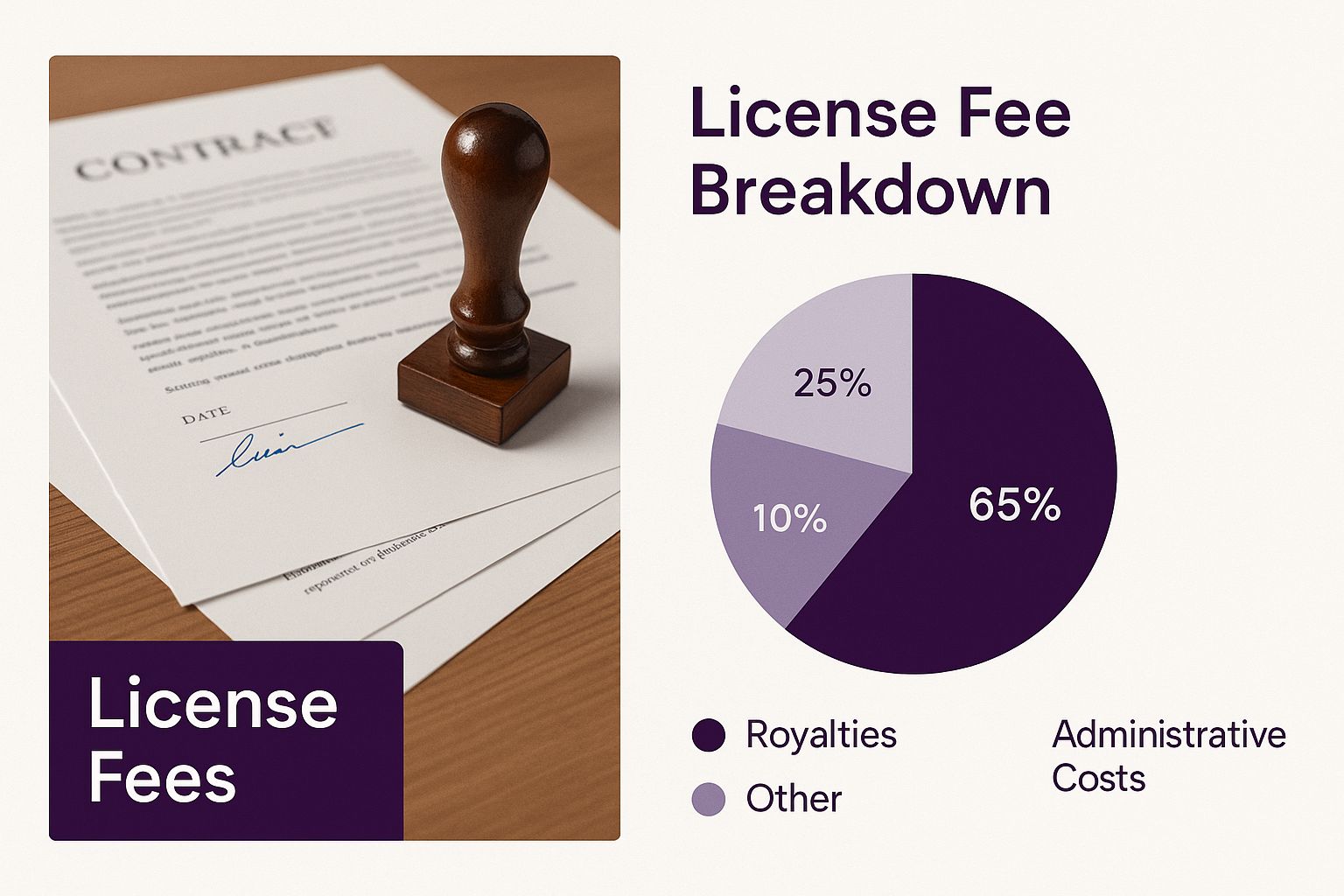
As you can see, while the licence is a core expense, it’s just one part of the overall financial picture when setting up in a free zone.
Mainland vs Free Zone Key Cost Comparison
To give you a clearer picture, here’s a direct comparison of the typical costs you can expect when setting up on the mainland versus in a free zone. Keep in mind these are estimates and can vary based on your specific business activity and chosen jurisdiction.
| Cost Component | Mainland Estimated Cost (AED) | Free Zone Estimated Cost (AED) | Notes |
|---|---|---|---|
| Trade Licence | 15,000 – 30,000+ | Included in Package | Mainland costs depend on activity; Free Zone is bundled. |
| Office Rent | 20,000 – 100,000+ (Annual) | Included (Flexi-Desk) | Mainland requires a physical Ejari; Free Zones offer cost-effective options. |
| Local Sponsor Fee | 10,000 – 25,000 (Annual) | Not Applicable | A major saving in Free Zones due to 100% foreign ownership. |
| Establishment Card | 2,000 | 2,000 | A standard government fee for visa processing capabilities. |
| PRO Services | 3,000 – 8,000 | Included or Add-on | Many free zones include basic PRO services in their packages. |
| Initial Approvals | 1,000 – 5,000 | Included in Package | Mainland involves multiple approvals from different departments. |
This table highlights the fundamental difference: the mainland is a sum of individual parts, while a free zone is a consolidated package. While the mainland offers unrestricted access to the local UAE market, a free zone often presents a more straightforward and financially predictable route for new businesses.
Long-Term Financial Wins and Cost-Effectiveness
Looking past the initial setup fees, the long-term financial benefits of a free zone are where things get really interesting. The promise of 0% corporate and personal income tax is a massive draw, leading to incredible savings as your business scales. This tax-free environment means you can reinvest more of your profits directly back into growing your company.
Many of Dubai’s free zones have also become go-to hubs for low-cost business setups by creating compelling packages for entrepreneurs. These deals often bundle the trade licence, office solution, and residence visas into one affordable payment, allowing founders to launch with minimal capital. Solutions like flexi-desks and virtual offices, widely available in these zones, help slash traditional rental costs. You can learn more about these low-cost business setup solutions in Dubai to see how they might work for you. By choosing the right package, you can secure a legitimate UAE presence and a residence visa without the heavy financial weight of a long-term office lease—a perfect strategy for lean startups.
Budgeting for Visas and Establishment Cards
Alright, you’ve got your trade licence in hand. That’s a huge step, but now comes the next critical piece of the puzzle: getting you and your team legally established in the country. This means diving into the costs for residence visas and the one document that unlocks them all—the Establishment Card. Don’t think of this as just another administrative fee in the cost of setting up a business in Dubai; it’s the foundation for building your team on the ground.
Think of the Establishment Card as your company’s official ID for immigration. Before your business can sponsor anyone—you, your partners, or your employees—it needs this card. It’s what gets your company registered with the immigration and labour departments, giving you the green light to start applying for visas.
This is a non-negotiable step for any business planning to have a physical presence, whether you’re setting up on the mainland or in a free zone. The process itself is fairly routine, but it’s the essential gateway to bringing your people into the UAE.
Understanding the Establishment Card Fee
The Establishment Card is one of the more straightforward costs you’ll face. The fee can fluctuate a little depending on the specific authority and any government updates, but it’s a predictable expense you can plan for.
You should budget around AED 2,000 for the initial issuance. Keep in mind, this is an annual card. You’ll need to renew it every year to keep your company’s sponsorship status active. If you let it lapse, you won’t be able to process new visas or renew existing ones, which can cause serious disruptions and even lead to fines.
Breaking Down Residence Visa Costs
Once your Establishment Card is sorted, you can start the visa process for your team. Each visa has its own price tag, and the total cost is made up of several smaller fees paid at different stages. The financial steps are pretty much the same whether you’re getting an investor visa for yourself or an employment visa for a new hire.
Here’s a general look at the costs involved for one residence visa:
- Application & Entry Permit: This is the first payment to get the ball rolling. It covers opening the application file and issuing an entry permit, which allows the person to come into the UAE to complete the process.
- Change of Status (In-Country): If your new hire is already in the UAE on a tourist visa, this fee lets them switch to a residence visa without having to leave the country. It’s a convenient but extra cost.
- Medical Fitness Test: A mandatory health check-up is required for all visa applicants. This is done at a government-approved medical centre to screen for specific communicable diseases.
- Emirates ID Application: This is the fee for the UAE’s mandatory resident identity card. Everyone living here needs one.
- Visa Stamping: The final step is getting the actual visa sticker placed in the person’s passport, officially making them a resident.
Expect the total cost for a single, two-year residence visa to land somewhere between AED 3,500 and AED 5,500. The range depends on factors like how quickly you need it processed (urgent processing costs more) and other small administrative charges.
Planning Your Workforce and Budget
The number of visas you need will have a direct and major impact on your startup costs. Remember, these aren’t just one-off fees; each visa needs to be renewed every couple of years. That’s why thinking carefully about your staffing plan from day one is so important for your financial planning.
For example, if you’re bringing on five employees in your first year, you need to budget between AED 17,500 and AED 27,500 just for their visa processing. And that’s before you even factor in other mandatory costs like health insurance. By mapping out every visa-related expense ahead of time, you can build a realistic budget and avoid any nasty financial surprises down the line.
Uncovering Hidden Costs and Ongoing Expenses

A smart budget looks far beyond that first big invoice for your trade licence. The real cost of setting up a business in Dubai is found in the recurring, and sometimes unexpected, expenses that are absolutely vital for your long-term financial health. Getting a handle on these ongoing commitments is what truly separates a flashy launch from a sustainable business.
Think of it like buying a house. The initial setup fee is your down payment—it gets you the keys, but it certainly doesn’t cover the mortgage, utilities, or upkeep. In the same way, once your company is officially registered, you have to plan for all the annual costs that keep it legally compliant and operational. Ignoring these can create serious cash flow headaches down the line.
Annual Renewals and Mandatory Fees
Your biggest recurring cost, without a doubt, will be the annual trade licence renewal. This is non-negotiable, whether you’re in a free zone or registered with the Dubai Department of Economy and Tourism (DET). This fee, which can easily range from AED 10,000 to AED 50,000 or more, is what keeps your business in good legal standing.
But that’s not all. A few other essential renewals will pop up on your annual budget:
- Establishment Card Renewal: This card is what allows your company to sponsor visas, and it needs to be renewed every year.
- Office Rent: Whether you’ve got a physical office on the mainland or a simple flexi-desk in a free zone, this is a fixed rental cost you can count on.
- Local Service Agent/Corporate Sponsor Fees: If you have a mainland company that requires one, you’ll have a fixed annual fee that you’ve negotiated with your Emirati partner.
Operational and Compliance Costs
Beyond the core government renewals, you’ve got a whole host of other operational expenses to factor into your financial planning. These are the day-to-day costs of actually running your business and having a team in the UAE.
One of the first things you’ll do is open a corporate bank account. While the account itself might not have a fee, many banks require a hefty minimum balance, which means a chunk of your capital is effectively tied up. On top of that, you’re legally required to provide health insurance for every employee, which is a recurring premium that grows as your team does.
A crucial point many forget: government-related tasks almost always have their own service charges. Public Relations Officer (PRO) services, which are essential for handling the paperwork for visas, labour contracts, and other official submissions, are an operational expense you can’t afford to overlook.
Navigating UAE Taxation
The UAE’s tax landscape isn’t as simple as it once was, and every business now has to account for two key taxes in their financial models. Getting these right is critical for accurate budgeting and staying compliant.
First up is Value Added Tax (VAT), which is a 5% tax on most goods and services. If your company’s annual revenue crosses the AED 375,000 threshold, you are legally required to register for VAT, file regular returns, and manage all the accounting that comes with it.
Second, the UAE now has a Corporate Tax. Any business with a net profit exceeding AED 375,000 is subject to a 9% tax. This demands meticulous financial record-keeping and smart planning to manage your liabilities. Working with a tax specialist is often the best way to make sure you’re taking advantage of the UAE’s favourable environment while meeting all your legal duties.
Finally, beyond all the official fees, don’t forget to budget for the essentials that make your business run, like marketing, software tools, and the cost of building a professional business website. By anticipating these hidden and ongoing costs from the start, you can build a solid financial strategy that will support your business long after its successful launch.
How a Setup Partner Optimises Your Budget
Trying to navigate Dubai’s business setup process on your own can feel a bit like assembling a complicated piece of furniture with the instructions missing. One wrong move—picking an unsuitable business activity, filing the wrong form, or missing a key deadline—and you’re suddenly facing hefty fines and long delays. This is where bringing in a professional corporate service provider stops being an expense and becomes one of the smartest investments you can make.
Think of a setup partner as your local guide who knows all the shortcuts and potential pitfalls. Their expertise in local laws and their established relationships with government departments mean they can chart the most direct and efficient course for you. They make sure every document is spot-on the first time, helping you sidestep penalties that could cripple your budget before you even open your doors.
Maximising Value and Minimising Waste
One of the biggest benefits is simply avoiding unnecessary spending. A good consultant will take the time to really understand your business model. They’ll guide you to the right jurisdiction and licence type so you’re not paying for business activities you don’t need or leasing an office that’s far too big for your current team. They slice through the red tape to find the most streamlined, cost-effective path for your specific goals.
This kind of insider knowledge is gold, especially when you’re trying to make the most of the UAE’s pro-business environment. An experienced partner can spot opportunities to structure your company for better tax efficiency, setting you up for long-term savings. They deliver cost-effective business setup solutions tailored to your needs, making sure every dirham of your initial investment is put to good use.
The true value of a corporate service provider isn’t just in filing paperwork. It’s in the strategic advice that prevents expensive mistakes and uncovers hidden savings, guaranteeing a smooth and financially sound start.
An Investment in Efficiency and Peace of Mind
Beyond the direct savings on fees and fines, a setup partner gives you back your most valuable asset: time. Instead of losing weeks trying to decode bureaucratic processes, you can stay focused on what really matters—building your business strategy, talking to potential customers, and planning for growth. Getting your business up and running faster means you start earning revenue sooner.
Plus, you get a single, reliable contact for everything. Their support often covers the entire journey, from visa processing and opening a corporate bank account to handling your yearly compliance. Many even offer 24/7 support, giving you the confidence that an expert is always on hand to tackle any issues. Ultimately, working with a specialist isn’t just about managing the cost of setting up a business in Dubai; it’s about investing in a seamless, secure, and financially optimised launch for your venture.
Frequently Asked Questions
When you’re crunching the numbers for a Dubai business launch, a few key questions always pop up. Let’s tackle the most common ones head-on to give you a clearer picture of the financial road ahead.
What Is the Cheapest Way to Set up a Business in Dubai?
If you’re looking for the most budget-friendly entry point, a free zone package is almost always your best bet. Look for one that bundles your trade license with a flexi-desk or a shared office facility.
This clever combination gives you a legitimate business address and all the necessary legal paperwork without the hefty price tag of a dedicated private office. It’s the go-to strategy for startups and solo entrepreneurs looking to minimise that initial cost of setting up a business in Dubai.
Is a Physical Office Mandatory for a Dubai Business?
This really comes down to where you decide to set up shop—mainland or free zone.
For a Dubai Mainland company, the answer is a firm yes. You are legally required to have a physical office space with a registered lease agreement, which is officially recorded through the Ejari system.
Free zones, on the other hand, are built for flexibility. Most offer smart solutions like virtual offices or flexi-desks. These options perfectly satisfy the legal requirement for a registered address within that specific zone, giving you access to professional facilities without being locked into a costly, long-term lease.
Choosing between a mandatory physical office on the mainland and a flexible free zone solution is one of the single biggest decisions that will shape your startup budget.
What Are the Main Recurring Costs After Setup?
Getting your business registered is just the first step. The real key to long-term success is planning for the annual costs that keep your business running smoothly.
Your primary recurring expenses will be your trade license renewal, Establishment Card renewal, and the rent for your office or flexi-desk. If you’re on the mainland, you’ll also need to budget for your Local Service Agent’s annual fees. On top of that, remember to account for visa renewals, mandatory health insurance for yourself and any staff, and any ongoing PRO service charges. Getting a handle on these costs from day one is crucial for your company’s financial health.
Ready to move forward with the best corporate service provider in Dubai, Abu Dhabi & Sharjah? We are specialists in both Mainland and Freezone company formation across the UAE. We create practical, cost-effective solutions and provide 24/7 support to make your launch a success.
Let us help you take full advantage of the UAE’s tax benefits with a partner who gets it.
📞 Call Us Now: +971-52 923 1246 or WhatsApp Us Today for a Free Consultation.